Suppose you can imagine a medieval peasant worker. In that case, you probably think of backbreaking agricultural labor, mud-soaked clothes, and life expectancies that would enviously be considered short for the modern worker.
True, famine and the plague were not quite employment benefits. But the unexpected flip-flop: such wretched peasants frequently had more days off per year than the average American worker nowadays.
That is the reality. Despite having to coexist with the Black Death and numerous other hardships, they could spend their lives amidst day-long feasts and celebrations and monthly village festivals.
The modern American, however, is lucky if he can pack one week of vacation into his life after laboring the full year for it.
So what did people hundreds of years ago, without telephones, air conditioning, or decent shoes, do better than the self-claimed epicenter of the industrialized world regarding healthier work-life balance? Let’s get our hands dirty.
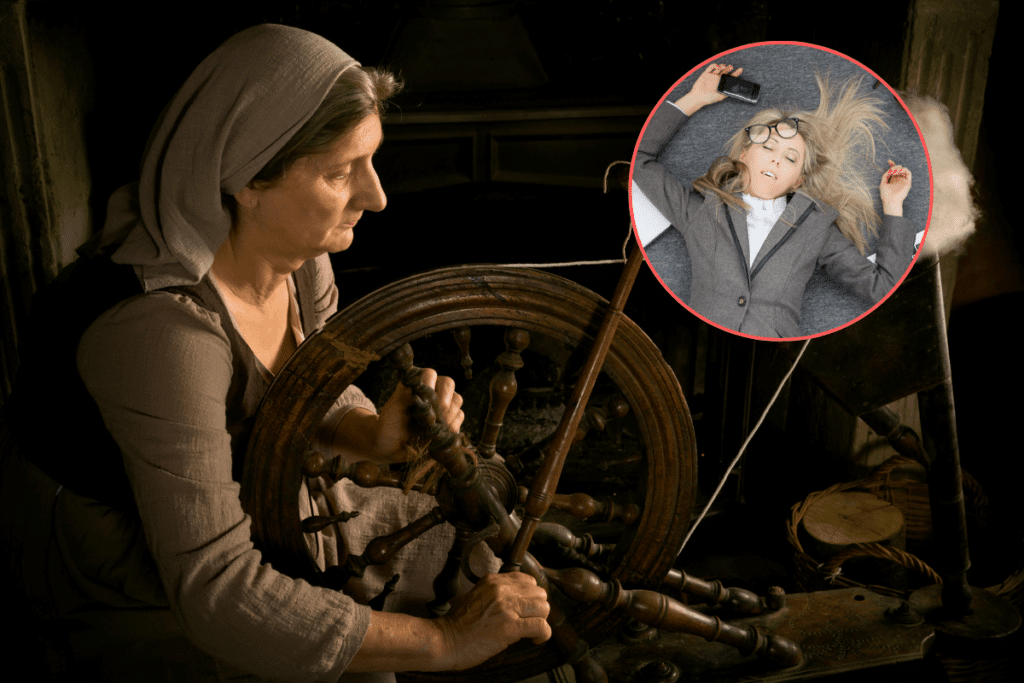
Medieval life governed by the clock
The medieval employment schedule differed from the 9-to-5 normal schedule. In the medieval era, the church influenced nearly all facets of life, such as the frequency of work done by the population.
Religious holidays were not optional holidays. They were days off work, sometimes extending into days or even fortnights of merriment. Weddings, funeral processions, saint days, and regional fairs were not only cultural markers but also excuses for not working.
Sundays were completely closed to work, and the rhythms of the agricultural year incorporated natural breaks. When the harvest was over, there was no urgent necessity for plowing. In the slower times, peasants relaxed, partied, and frequently took their afternoon siesta.
Economist Juliet Schor calculates that peasants in 14th-century England could work as little as 150 days per year.
For context: the contemporary full-time American employee punches the clock for roughly 260 days a year. And after one full year of employment, the vast majority of U.S. workers are legally entitled to a paltry eight days off per year.
Peasants who endured hard, muscular labor experienced the numerous festivals and relaxed rhythm of day-to-day life as balancing factors. Americans who sit at computers and executive chairs look at the calendar and gasp at the desolation.
Fewer working days than you’d expect
Historians have attempted to list just how many holidays peasants had off. Depending on the locality and the century, it could be anywhere from 150 to up to nearly 180 days off annually.
Some lasted for a week or longer, especially if they accompanied significant life events. Even the daily routine was slower than what most Americans are used to.
The day started at the rising of the sun and typically ended with the setting of the sun, but the breaks were commonplace. Lunch could last one or two hours, and then there would be a break. In southern Europe, early versions of the siesta were an institutional custom.
Even the lunch breaks are vanishing for most American workers nowadays, and they are eating at their desks and responding to e-mails.
The communal sense counted for something, too. Peasants were not partying alone; festivals brought people together, and there was something for them to anticipate beyond sustenance.
Workers today commonly report feelings of isolation, even prior to the pandemic work-from-home, because their workaday lives leave them little free time for social rites beyond the workplace.
America’s summer issue
Fast forward to the year we currently inhabit, and the scenario has taken a very un-peasant turn. America is the developed nation that is the only one that doesn’t offer a federal mandate of paid vacation days.
In France, you are entitled to 30 days. In Spain, 22. In Germany, 20. Even Japan, barely renowned for its relaxed employment culture, offers at least 10 paid days off. In the United States? That will depend on your boss.
Workers typically receive one week after one year of employment, perhaps two or three weeks after eight or ten years. But there is no national safety net.
Even where days off are permitted, few Americans ever take them. Commissioned in 2023 by Expedia, one report said more than half of American workers had forfeited vacation days, usually because they didn’t want to seem substitutable.
That constant in culture for Americans entails not only fewer breaks than Europeans but more typically fewer breaks than medieval peasants.
Emails, Slack alerts, and performance reviews are the feudal tasks of the day; only peasants couldn’t be awoken in the dead of night responding to some client catastrophe. The invisible cost of never sleeping. Anything for the constant hustle and bustle takes its toll.
Researchers consistently link overwork and stress, anxiety, and ill health. Stress over a longer period can wreck the immune system, speed up the risk of cardiac disease, and cause burnout, a phrase medieval serfs didn’t own but knew anyway.
Burnout isn’t simply for individuals; it happens in organizations, too.
Researchers released studies for the Harvard Business Review that longer hours actually reduced productivity and increased the number of errors. In short, the endless exhorting for productivity many times comes full circle back upon itself.
Relationships suffer too. When workers are on call day and night, the family dinner, the youth soccer game, or just hangtime with friends can slip away. Medieval feasting doubled as social bonding times. In America today, missed vacations and overtime signal alone life.
And there is the dollar factor, too. Burned-out workers rack up billions of dollars worth of health bills, turnover, and absenteeism for corporations. What is sold as an ethic of working oneself to the bone actually produces a sneaky attrition of productivity and morale.
In rebelling against the culture of leisure, American corporations are propagating their own extinction. Were the peasants more content?
To be specific, nobody is advocating for a replacement of office cubicles with thatched huts. Peasants had shorter, more brutal lives by just about any measure. But for leisure activities, we were beaten (literally).
Their culture appreciated necessary rest, not for the large part through charity, but because they didn’t want the workforce to collapse (or rebel).
Comparison is shameful. Since peasants in the Middle Ages, who didn’t enjoy the advantage of electric light or medication, were forced to stop working dozens of times a year, why can’t one of the wealthiest nations of all time be able to afford, for instance, ensuring its population relaxes?
Lessons from history
Medieval times could teach America a thing or two. Mandated laws like paid leave, the right not to receive working emails after hours, or longer parental leave could tip the balance back into fairness.
Others are already experimenting. France even boasts a “right to disconnect” law, prohibiting work communication after hours. Icelandic firms experimented with the short working week for full pay and enjoyed increased productivity and satisfied workers.
Even in America, firms are experimenting with unlimited vacation days, although peer pressure far too often prevents the worker from ever taking them.
The argument? We needn’t reiterate the medieval calendar of festivals and saints’ days. But the fundamental assumption, that relaxation is not only pleasant but essential, holds good today as it did in the year 1300.
Clearing space for relaxation today
Unless there are fundamental policy shifts, workers can still recover their wasted downtime:
Draw up boundaries. Disengage from work alerts after hours. Specify clearly when you are unavailable.
- Take your days off – Do not think of them as luxury items. They are scheduled for your health.
- Micro-breaks – Bits of walking, eating your lunch off-site, and yes, even napping can help you.
- Spend on hobbies – Peasants once had festivals; you can have trivia nights or painting, or gardening.
- Safeguard the weekends – Respect the Sabbath and Sunday as the holy days they once were, because relaxation still counts.
- Demand change – Encourage employee programs that add paid days off or flexible hours. The more employees push for it, the more it can change the culture.
So who really had it better?
It is strange that medieval peasants, who had no luxury of light or penicillin, were possibly working fewer hours than the modern American worker.
Though the worker now gets higher wages, longer life, and comforts beyond the ken of the resident of the 14th century, they sacrifice those benefits for continuous pressure and reduced free time.
History reminds us that productivity without rest doesn’t last. Peasants didn’t have much, but at least they could dance at the village fair.
When your boss frowns upon your R&R form, just remember: a peasant in medieval times had more R&R than you.
It isn’t going to make your boss more sympathetic, but it does validate one thing: work without relaxation wasn’t sustainable, no matter the era.



No Comments