Most humans at age 90 are well into their retirement years, days spent with their grandchildren or hobbies.
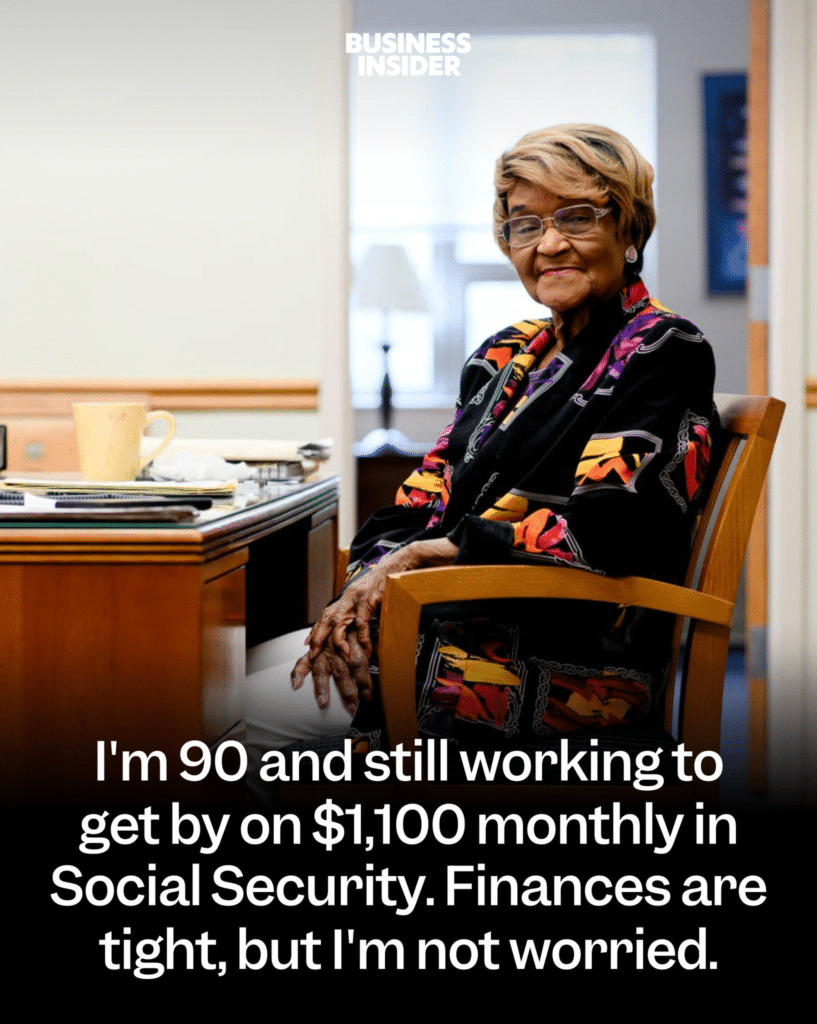
But for Boyd, a veteran Toledoian with a prestigious career in politics and real estate, work is a continuous aspect of daily life, although one she has to do rather than desire to.
Boyd currently is a director’s assistant with PathStone, a non-profit agency that helps people over 55 back into the workforce. She is about a 24-hour-a-week worker if funding allows, paying about $1,100 a month.
It is all her income with her $1,100 Social Security paycheck. It doesn’t go too far, though, with inflation pushing up grocery and gas prices, but Boyd is insistent that she’s not worried.
“I’ve always been employed, and the only time I was unemployed was during the COVID-19 pandemic. I was always willing to do any job that I felt I could make an honest living in. I’ve never had any thoughts about stopping or retiring when I couldn’t afford to.”
Breaking barriers in the 1950s
Boyd’s is a story of determination as well as perseverance. In 1953, she became a trailblazer as the first black student to graduate from one of Toledo’s finest high schools. She went to college for a couple of years but never graduated. She instead plunged into politics.
She made history again in 1958 by being the first African American to be employed by the Lucas County commissioner’s office as well as the Board of Elections. She began as a volunteer and became a full-time employee the next year, remaining for a period of six years.
“Politics is everything, whether it’s the newspaper, the hospital, or the school board,” Boyd recalls.
Juggling politics, property transactions, and family
Along with her political career, Boyd became a licensed real estate agent in 1966. As a single mother who had to raise two children, however, she earned more than commissions. She held several positions to ensure she earned enough to support herself.
Her family responsibility only mounted. Year by year, she took responsibility for one granddaughter after another, then a great-grandson. “Helping my family would require me to work,” she says.
The economics of old age
Boyd’s own Social Security benefit is a mere $1,100 a month, considerably less than a standard retirement income to cover basic expenses. What’s more, she lost a pension because she did not have 30 years to be eligible for Ohio’s Public Employees’ Retirement System.
With about 27 years credited, she didn’t merit it. Instead of saving that money, she withdrew it throughout the years to cover tuition for her children’s schooling, a down payment for a car purchase, and myriad pressing expenses.
“Technically, I blew that money,” she admits, “but I have no regrets.”
That left her with only Social Security and her non-profit work to support herself. Older adults in such a situation face increasing hurdles: housing costs, medical expenses, insurance premiums, and utilities keep increasing, but haven’t been matched by government assistance.
It’s about $1,900 a month, on average, according to the Social Security Administration, for 2025 benefits. That’s still reasonable, but much higher than what Boyd is paid.
Workplace ageism is yet another deterrent
Despite decades of experience herself, Boyd is aware firsthand how difficult it is for older adults to hold their job. It’s an issue that PathStone aims to fight with its particular service.
It hires older adults who desire supplemental income and trains them in PC and workplace skills with the aim of procuring newer jobs.
“Age discrimination is a fact,” Boyd maintains. “It’s one of my jobs to convince employers that people over age 55 can add value to a workplace.”
Examples showed that discriminatory treatment towards older and younger workers is bad for companies, costing them turnover and lost prospects. But ageism persists, leaving seniors such as Boyd to rely on part-time work just to make ends meet.
Faith, politics, and community give her a boost
Despite economic troubles, Boyd remains one of the busiest senior citizens in her area. She is an Eucharistic minister, lector, and parish councilor in her Church.
She is also a member of the executive board of the Democratic Party and has even established a women’s professional and business club. She’s even penning a book currently titled Reflections of a Liberal Politician (Who Believes in Work), with one chapter covering aging.
“I can tell you about the past, but you can’t tell me about the future,” she says with a smile.
Relationship with family members and ambitions
She divides a six-bedroom house with her daughter, granddaughter, and grandson. They contribute to paying the rent, and it is a house that is never lacking love or activity, she says. With 14 great-grandchildren, family is still where Boyd’s foot is planted.
She concedes that money is close to a priority, with groceries, utilities, and insurance taking a huge chunk out of each paycheck, but is comforted by knowing she would never have to endure her struggles alone.
“Right now, I have no doubts about my future, and if I’m unable to work, I know my children will look out for me”, she says.
She is also open to residing in a residential complex for seniors one day, where costs would be tied to her income. For now, though, she wishes to be unrestricted.
Her health, she says, is good. Beyond high blood pressure and a slight sinus issue, by her doctor’s account, she appears to be 62 years old rather than 90.
“I plan on working as long as my health permits.”
Boyd’s resolve is part of a broader phenomenon affecting millions of Americans. Inadequate savings mean that most older adults are still working into their 70s, 80s, and even 90s.
Reports from the U.S. Bureau of Labor Statistics show that over the next decade, people aged 75 or beyond still working would increase faster than any other age demographic.
For Boyd, it’s not about numbers, but survival and purpose.
“I plan on working as long as my health permits,” she says. “I live a spiritual life. I’ve had so many positive things in my life, and that’s what makes me happy now.”
Regardless of financial stress, she assures that she is not concerned. To her, family, community, and work are still passionate about is what life is about.


No Comments