Want a work area that disappears once you clock out? You are in the right place. From clever closet conversions to bookcase doors that conceal a whole desk, these ideas let you work from home without giving up the style of your space.
A hidden desk is simply one that disappears when the work stops. In my own setup, a fold-down panel inside a cabinet lets the room read as a room instead of an office. Below are 25 practical ideas that look as good as they function.
1. Room-Divider Office for a Studio Apartment
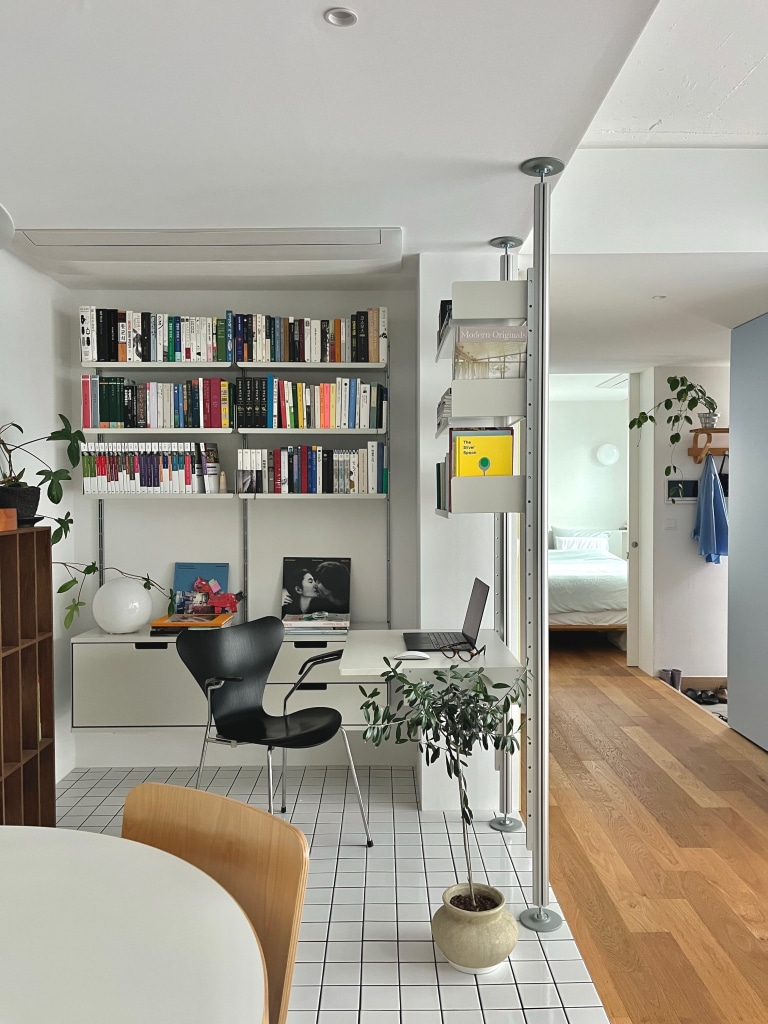
In a studio, every square foot has to do double duty, so the best hidden office is one defined zone that reads as furniture. Place a tall bookshelf, open shelving unit or console perpendicular to a wall to form a visual barrier between work and living areas, without blocking light or floor space. Keep all your gear on or behind that boundary so the rest of the apartment stays clean. A deep, rich accent wall behind the desk marks the work zone without a real wall, and bright white shelf interiors reflect light so the nook does not swallow the room.
Tips:
- Use a tall open shelf as a divider that anchors the office while still letting daylight through.
- Add a wall-mounted drop-leaf desk that folds flat and frees the floor after hours.
- Run cords through a slim cable box mounted at baseboard height so no wires spill into the living area.
- Choose office furniture in the same finish as your living room pieces so everything blends.
2. Closet Office
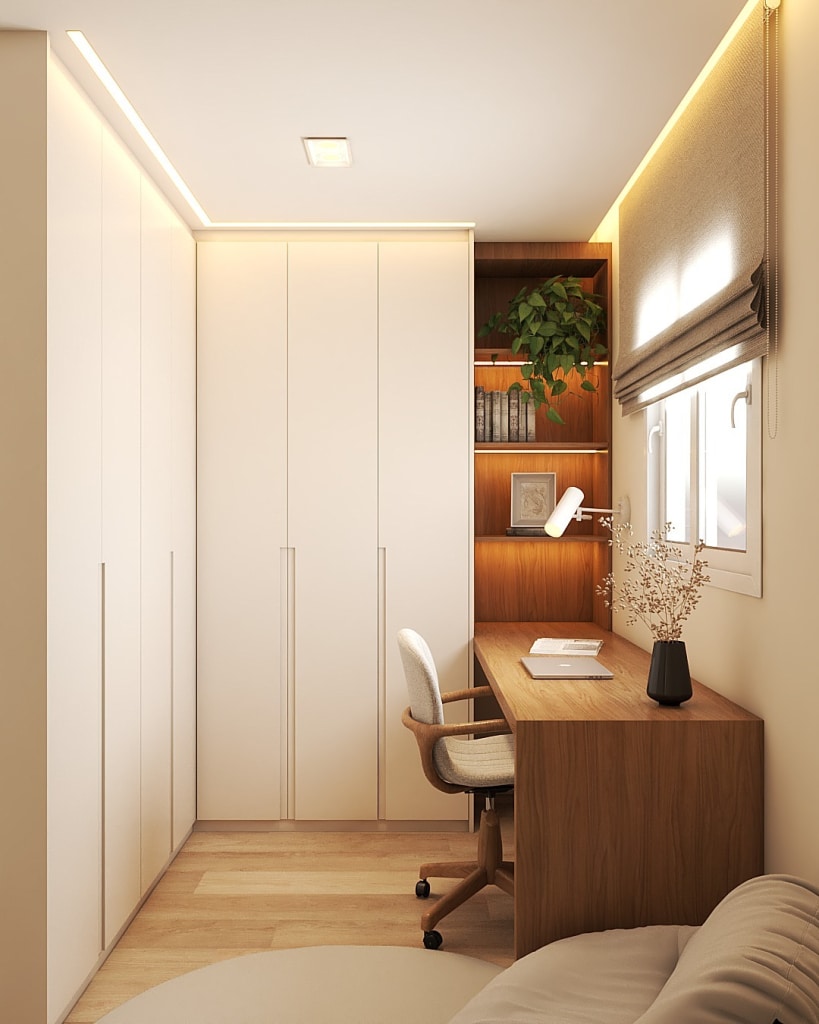
A reach-in or walk-in closet becomes a complete office once you remove the hanging rod, add a desktop and treat the inside walls as workspace. The enclosed shell handles sound, visual clutter and storage at once, so when the doors close, every trace of work disappears. Sliding barn doors in a soft walnut finish with brass hardware can pass for ordinary wardrobe panels while hiding floating shelves, a compact desk against the back wall and LED strip lighting. It is a smart fit for small homes and apartments.
Tips:
- Strip out the rod and any wire shelving first so you start with a clean shell.
- Mount the desktop 29 to 30 inches from the floor so standard seating fits comfortably.
- Stack shallow shelves above the desk to gain storage without losing knee room.
- Choose bifold doors that fold fully out of the way, or sliding doors with soft-close hardware for narrow hallways.
- Consider pegboard backing, cable channels along the walls and mirror panels that add a sense of depth.
3. Hidden Cabinet Workstation
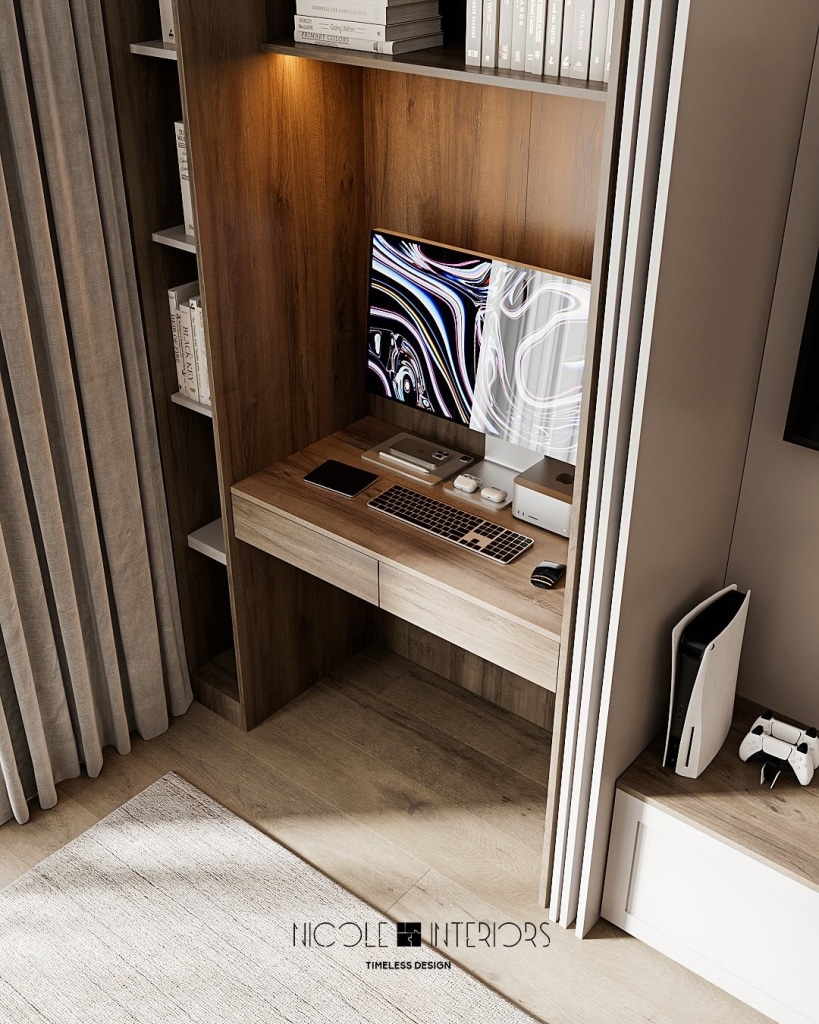
A built-in cabinet with a hinged or sliding front can turn any living room wall into a concealed workstation that looks like pure furniture when closed. Choose a cabinet at least 20 inches deep so a laptop, monitor and task light all fit without crowding the work surface. When the doors swing shut at day’s end, the living room goes back to being relaxed, with not a cord in sight. A deep, grounded exterior color makes the cabinet look like a planned built-in, while a bright interior back wall bounces light forward and keeps the space open.
Tips:
- Match the finish to your existing living room furniture so the cabinet blends in.
- Run power strips and cable management through the cabinet base before mounting, so no cords dangle outside the doors.
- Light the interior with a small LED strip or puck light to prevent eye strain.
- Confirm the interior depth is at least 20 inches before buying, so the monitor clears the door swing.
4. Fold-Down Wall Desk
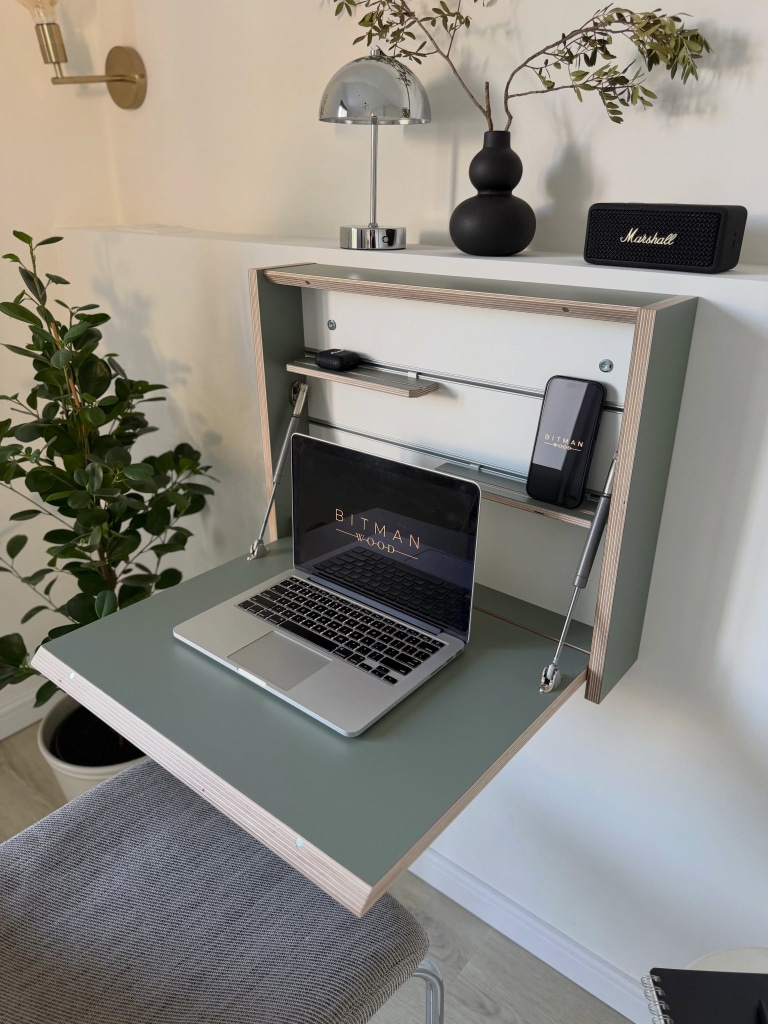
A fold-down wall desk mounts flush on a piano hinge and drops open in seconds to create a work surface, then folds back up and vanishes. Closed, it is only three to five inches thick, so even a narrow hallway or bedroom corner can host a full workstation. Look for models with built-in cable slots so cords tuck away when the desk shuts. When folded, it looks like a simple panel or piece of decor. A deep accent wall behind it frames the setup as a design choice, and a bright desk surface reflects task light upward.
Tips:
- Set the open surface at 28 to 30 inches off the floor to match standard desk ergonomics.
- Anchor it into wall studs, since a loaded desk puts real stress on ordinary anchors.
- Add a folding stool or slim bar stool that tucks beside it and keeps the floor clear.
- Keep the surface minimal: a laptop, a small lamp and a notepad are plenty.
5. Bookcase Door Office
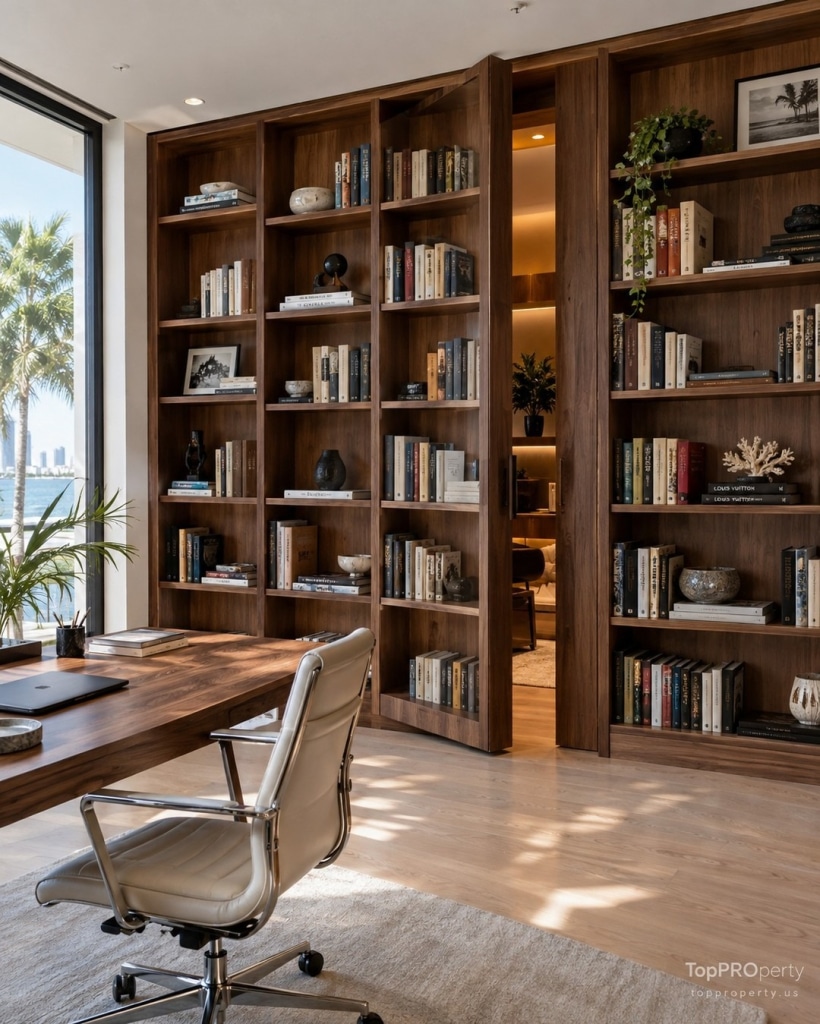
A bookcase that pivots open to reveal a fully equipped office is one of the best ways to keep work out of sight. The bookcase works as real storage on its outer side, so nothing looks like a disguise: books, baskets and decor sit on the shelves as in any other room. The key is a flush floor clearance and a pivot hinge system that swings smoothly under a fully loaded door. A variation hides the desk within the shelves so you pull it out when needed, which suits home libraries and living rooms. A rich, saturated wall inside signals a serious workspace, and a clean, bright back panel makes shelved items pop.
Tips:
- Use pivot hinges rather than barrel hinges, because they spread the weight top and bottom and prevent sagging.
- Make the bookcase at least 12 inches deep so it holds books convincingly while leaving room to swing.
- Run electrical conduit, ethernet and power strips through the wall cavity before mounting, so no cords trail out of the seam.
- Add a flush magnetic touch latch so the door closes with a push and opens with a press, with no visible handles.
6. Under-Stair Office
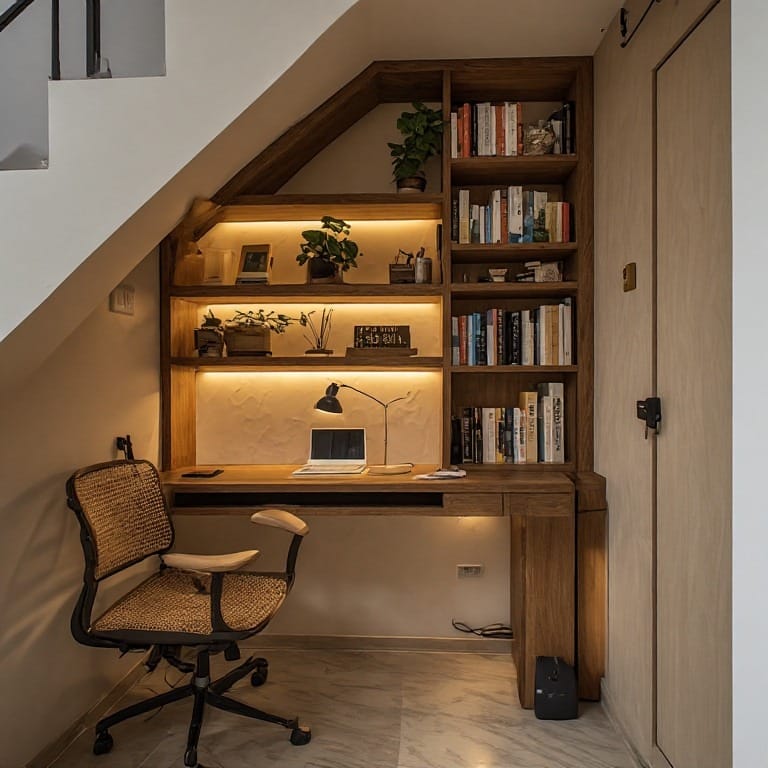
The triangular space beneath a staircase holds more usable area than most people realize. A built-in desk tucked under the sloped ceiling creates an enclosed, focused feeling that open-plan desks cannot match, and the angled line signals that this spot is separate from the room, which helps you switch into work mode. Measure from the riser face to the back wall first, since that depth decides whether a standard monitor fits or you need a wall-mounted screen. A pullout version slides out like a secret drawer, complete with cable management and a fold-down laptop shelf, with sage green walls and floating shelves tucked into every angle.
Tips:
- Keep the desktop level but design shelves to follow the stair angle so no vertical space is wasted.
- Use a wall-mounted monitor arm to free the desk and avoid the sloped ceiling pressing down.
- Aim a directional LED task light at the back wall, since these cavities get dark fast.
- Turn hollow risers into drawers or cubbies, and consider motion-sensor LED strips and soft-close slides on a pullout.
- Keep colors neutral inside the pullout and save bolder accents for the exterior door panel.
7. Garage or Basement Work Nook
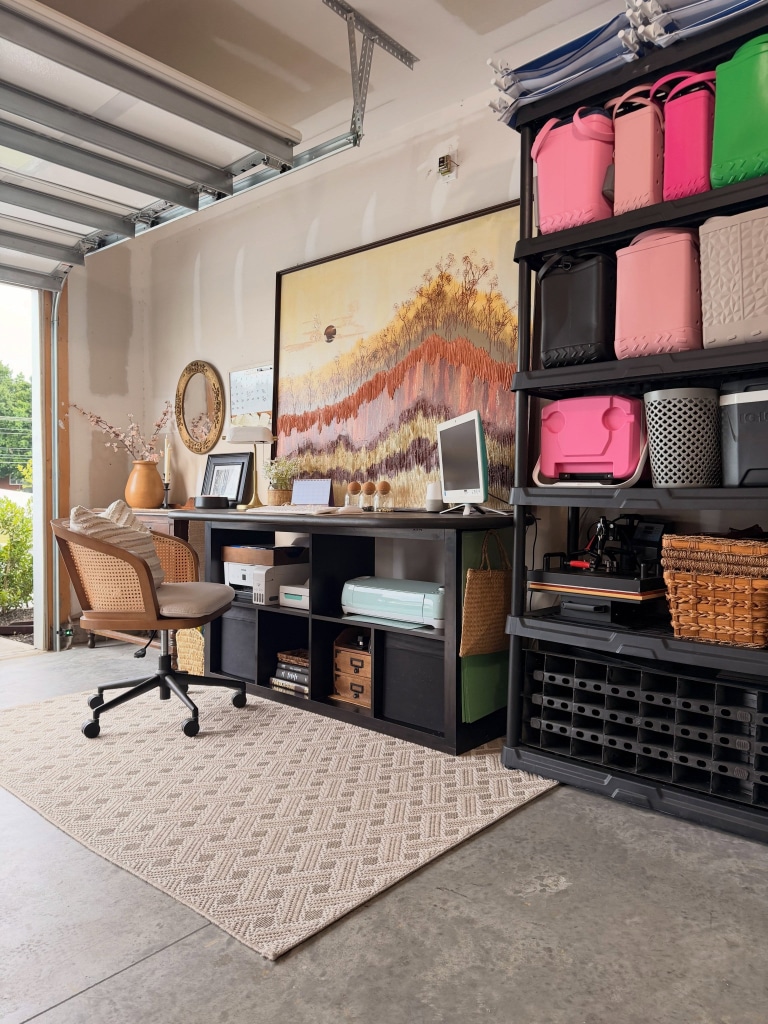
Garages and basements share a quality that suits focused work: they are already separate from the main living areas, so the boundary between home life and work is built in. Distractions stay upstairs or outside without any effort. The key is to claim one defined corner or alcove rather than spreading gear across the whole space, so the work zone feels intentional instead of abandoned.
Tips:
- Anchor the workspace to one specific corner so it has a contained footprint.
- Both spaces run humid, so keep a compact dehumidifier near the desk to protect electronics and add comfort.
- Use pegboards and wall-mounted shelving to lift supplies off the floor and make a utilitarian room feel organized.
- Replace harsh overhead fluorescents with a desk lamp and a warm bulb at eye level.
8. Ottoman, Console or Dining Table Desk
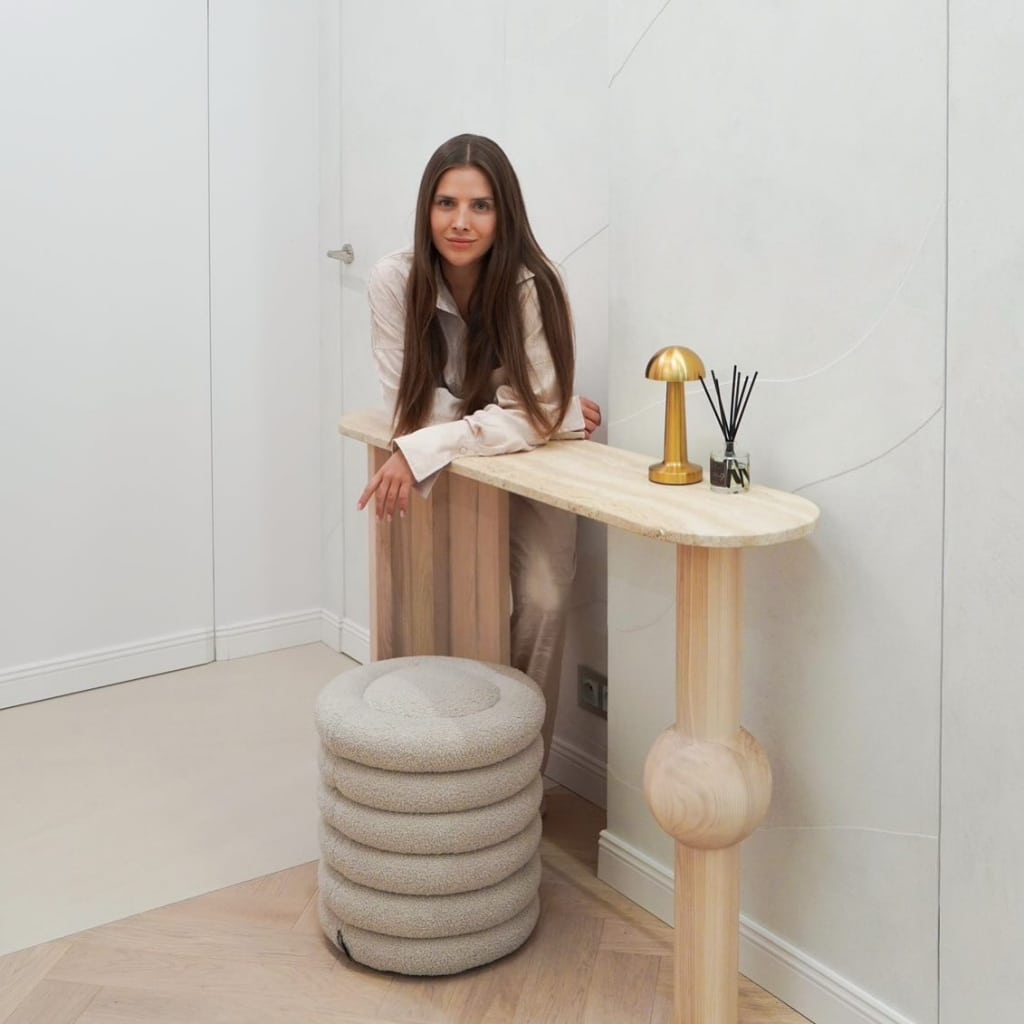
Any flat surface you already own can double as a desk with the right setup on top. A closed-top ottoman with a firm lid becomes a seated workspace the moment you add a lap desk or tray for your keyboard and monitor stand. It works best near a window or an outlet, where power and daylight are already within reach. A deep accent wall behind the improvised desk adds visual weight so it feels like a deliberate workstation, and crisp white trim sharpens the look.
Tips:
- Pick a storage ottoman with a rigid wooden lid, since soft tops flex and wobble under a keyboard.
- Use a console’s depth to your advantage: roughly 14 inches keeps the monitor at arm’s length and encourages good posture.
- Protect a dining table with a large desk mat that blocks scratches and mouse drag while marking the work zone.
- Park a small rolling cart beside the piece to hold files, chargers and supplies.
9. Murphy Bed Desk Combo
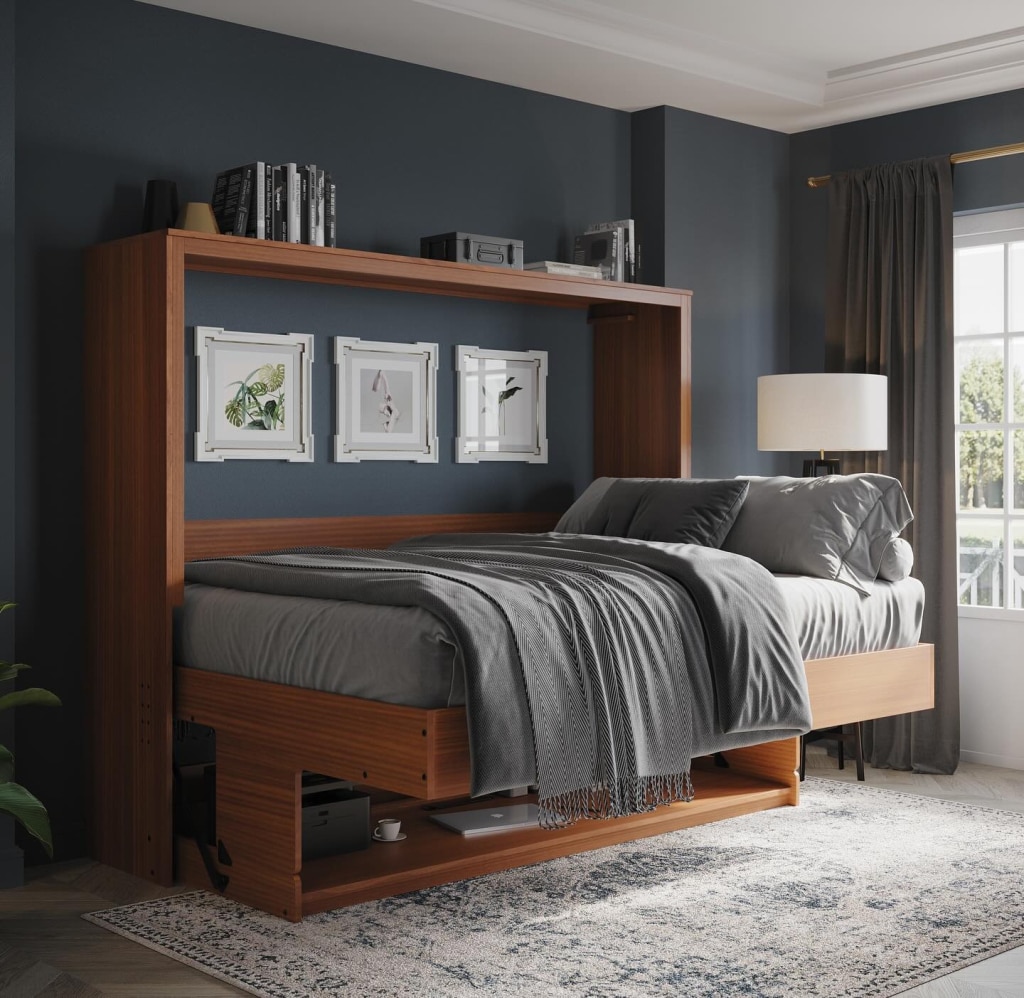
A sleek walnut panel changes from a queen-size bed into a full workstation in seconds. The desk folds out while the bed is upright, then folds away when it is time to sleep. Your bedroom stays a bedroom after hours, but at 9 a.m. you pull down the integrated desk shelf where your laptop and coffee mug already wait. A built-in LED strip underneath gives task lighting without harsh shadows. It is ideal for guest rooms and studio apartments.
Tips:
- Choose a unit with soft-close mechanisms to protect your equipment.
- Add floating shelves above for storage that does not interfere with the bed.
- Install cable management along the side panels.
- Pick a neutral wood tone that matches your existing furniture.
- Include a slim rolling stool that tucks fully underneath.
Pro tip: Mount a small mirror on the side wall at desk height. It doubles as decor and lets you check how you look on video calls without adding bulk.
10. Attic Trap Door Office
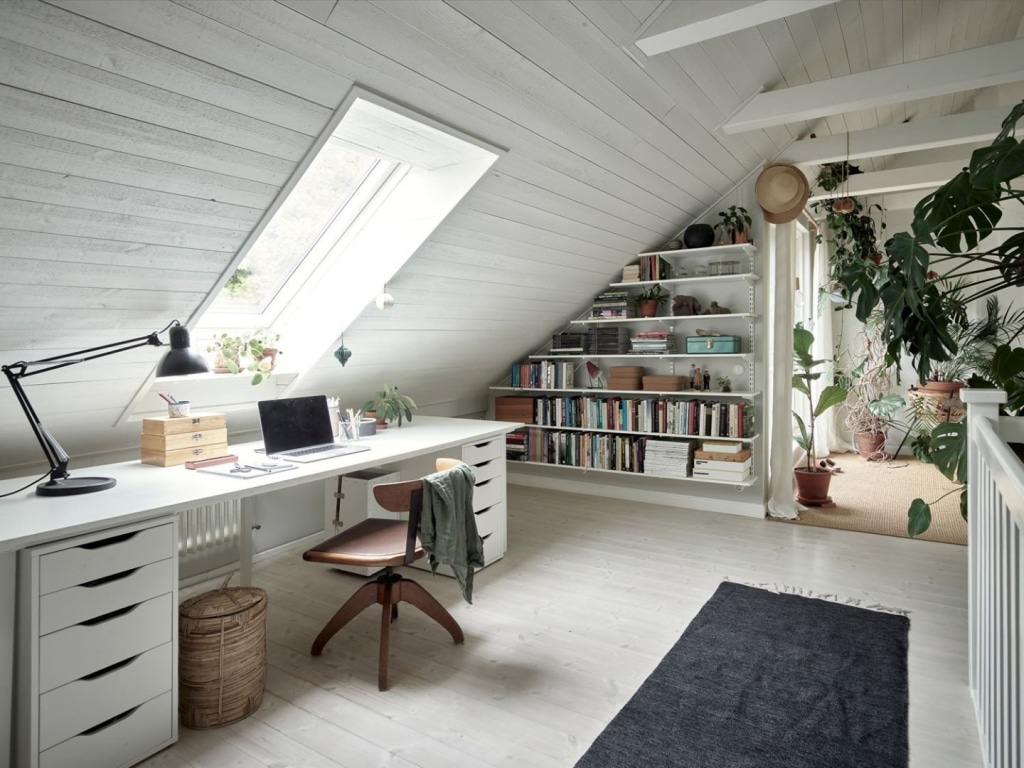
Pull down the attic stairs and step into a secret workspace where slanted ceilings make everything cozy. Tuck the desk under the eaves, string twinkle lights along exposed beams, and place a plush reading chair beneath the skylight for dreamy afternoon breaks.
Tips:
- Install automated stairs that blend into your hallway ceiling.
- Add weatherstripping around the door to cut noise.
- Mount floating shelves between the roof beams for vertical storage.
- Choose light colors to maximize reflected daylight.
- Keep a compact mini-fridge up there to avoid constant trips downstairs.
Pro tip: Balance rustic charm with modern tech by hiding cables inside decorative rope wrapping. It looks intentional and keeps the space tidy.
11. Garage Wall Fold-Down Station
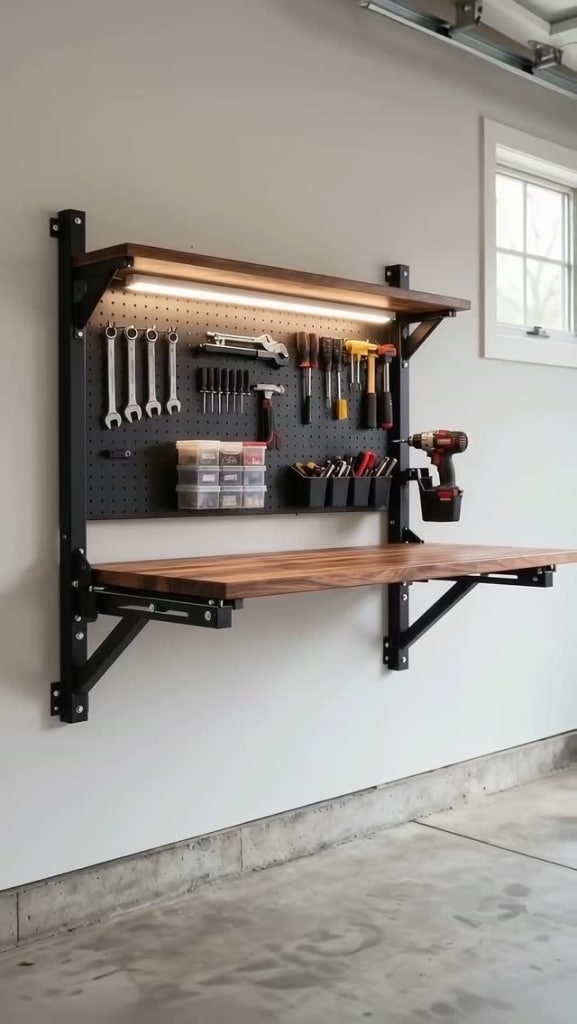
This station turns from a sleek wall panel into a full desk in seconds. A bamboo desktop locks flat against the wall when closed, showing only minimal hardware. Open it and built-in LED strips light your workspace while pegboard backing holds supplies. When you finish, it practically vanishes behind a vintage racing poster.
Tips:
- Install it at standing-desk height and pair it with an adjustable stool.
- Add magnetic strips inside for scissors, rulers and other metal supplies.
- Choose moisture-resistant materials to handle garage humidity.
- Include cable management channels along the mounting frame.
- Paint the backing board a bold accent color for personality.
Pro tip: Mount the station near an existing outlet and away from the garage door’s path, so vibrations do not disrupt video calls.
12. Basement False Wall Retreat
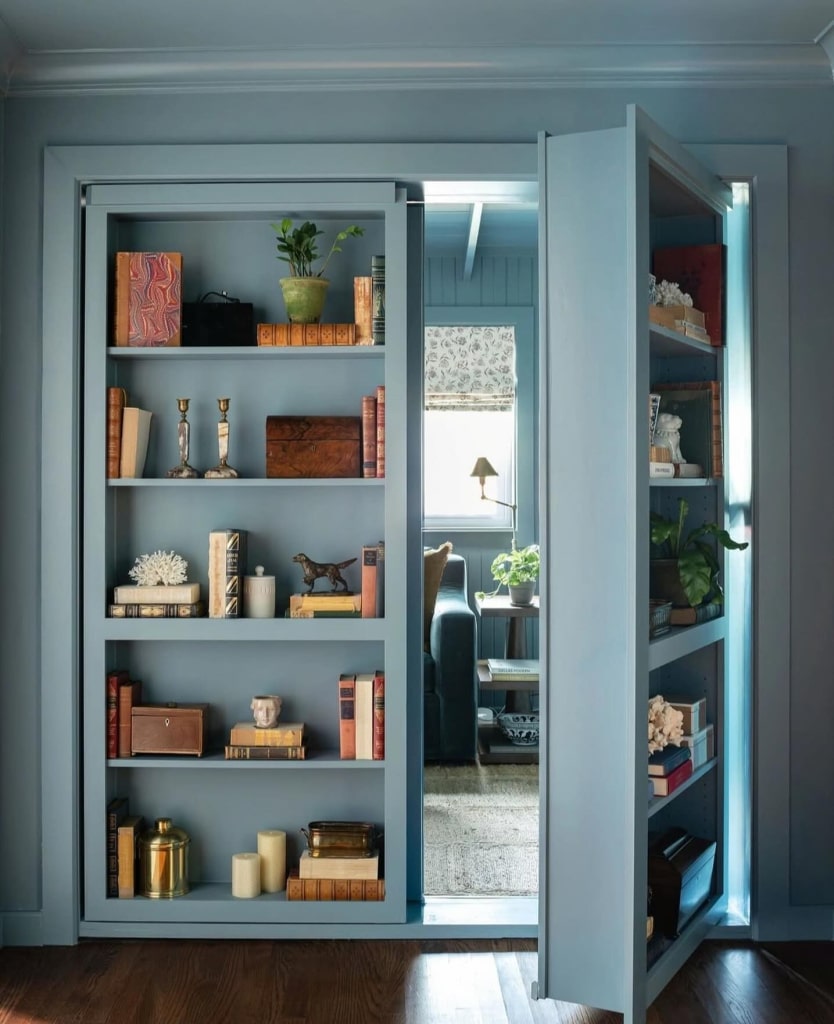
Behind what looks like a basic storage shelf sits a full office. A bookcase on hidden hinges swings open to reveal a workspace tucked into a basement corner. Picture moody charcoal walls, warm Edison bulb string lights draped over exposed beams, and a reclaimed wood desk facing a small window well turned into a green wall of trailing pothos.
Tips:
- Use floor-to-ceiling bookshelves as the secret door.
- Add weatherstripping to soundproof your calls.
- Choose battery-powered LED strips for ambiance without rewiring.
- Mount a magnetic whiteboard on the back of the door.
- Use a vintage trunk as rolling storage that doubles as seating.
Pro tip: Keep the false wall in proportion with the surrounding furniture. A flawless one looks suspicious, while matching the basement’s slightly rustic feel sells the illusion.
13. Laundry Room Folding Table
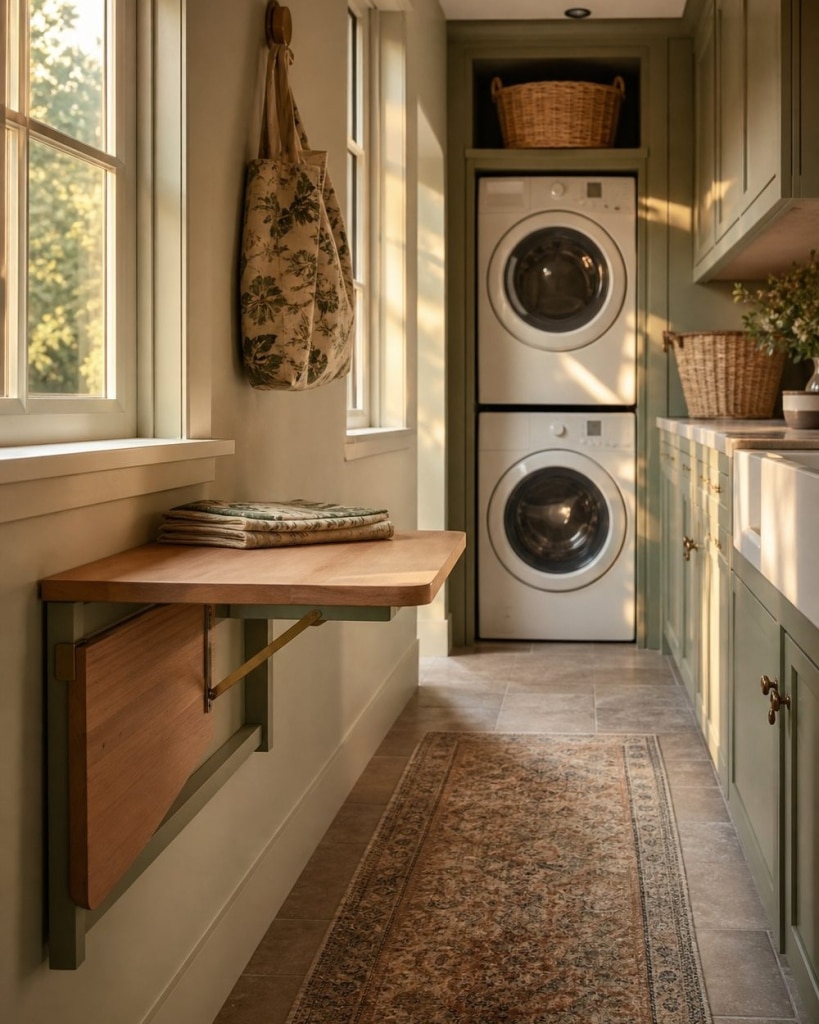
A folding table above or next to your washer and dryer can become a command center. The butcher block surface folds flat against the wall when laundry calls, then drops down into a sleek workspace with hidden cable management and a magnetic strip for supplies. Your laptop fits neatly between the detergent shelf and your succulent collection.
Tips:
- Install a fold-down table with built-in outlet strips.
- Add pegboard backing for flexible organization.
- Mount a slim LED light bar under the upper cabinets.
- Use magnetic containers for office supplies.
- Hang a small mirror for a quick check before video calls.
Pro tip: Choose a height that works for both standing sessions and sitting on an adjustable stool, which helps during long work stretches between wash cycles.
14. Desk Behind Living Room Artwork
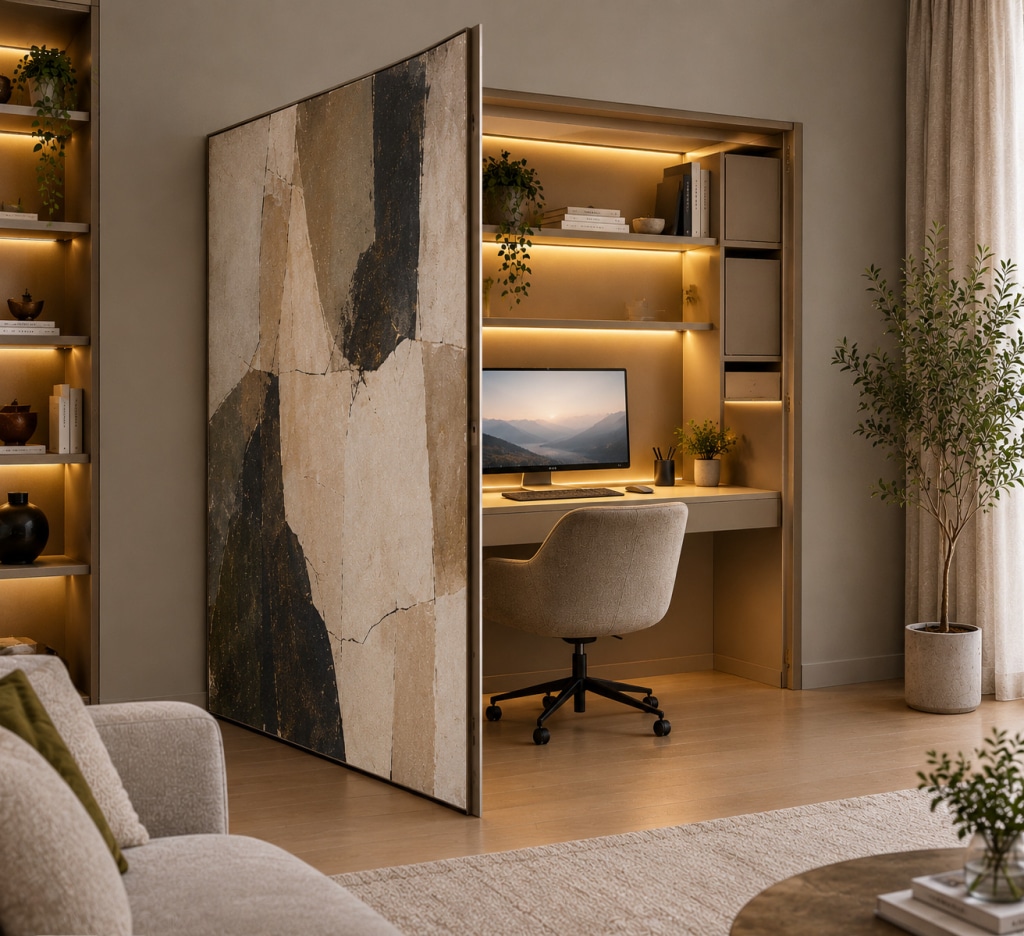
Your living room wall can hide a secret workspace behind an oversized abstract painting that swings open. Picture a sleek floating desk tucked behind the hinged artwork, with built-in LED strips casting a soft glow around your monitor. Color-matched storage cubes and a slim wireless keyboard keep the whole setup stealthy when closed.
Tips:
- Choose artwork with a sturdy backing that can carry the hinge hardware.
- Install soft-close mechanisms for silent operation.
- Add cable channels along the frame edges.
- Use a magnetic latch system for secure closure.
- Mount a shallow shelf for essential supplies.
Pro tip: Keep the desk depth under 16 inches so the artwork does not stick out awkwardly. You want it to look like intentional decor, not a suspicious bump.
15. Dining Table Hidden Compartment
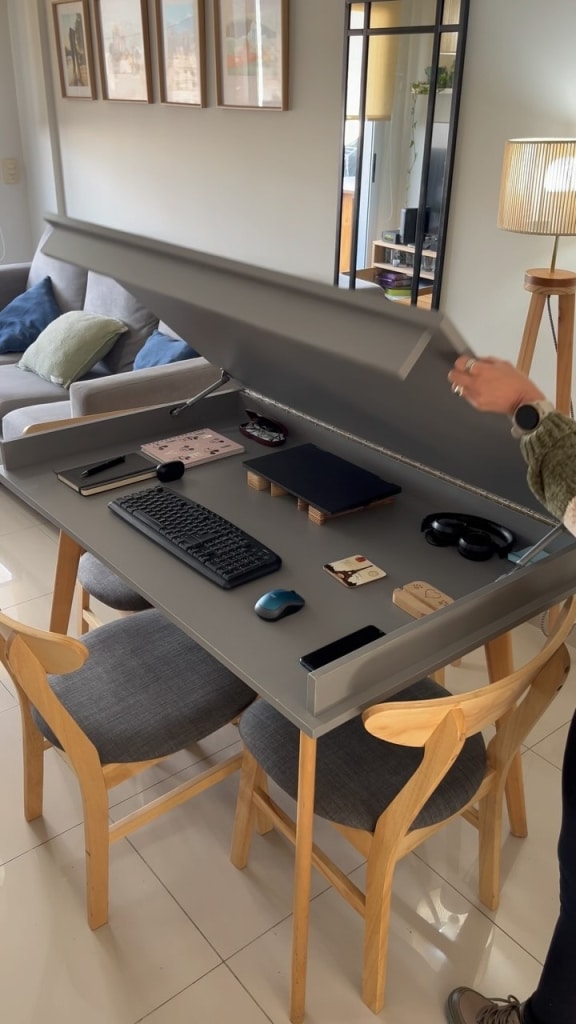
This walnut piece looks like any farmhouse table until you lift a hidden panel and find a laptop dock, a cord management system and a supply drawer built right in. The wood grain camouflages the seam, so when it is closed, no one suspects your video call headquarters sits under their dinner plate.
Tips:
- Choose tables with butterfly leaf mechanisms for easy conversion.
- Install soft-close hinges to protect your tech.
- Add felt lining to prevent scratches on devices.
- Include built-in power strips for easy charging.
- Select wood tones that hide seams naturally.
Pro tip: Keep the compartment under 4 inches deep to preserve comfortable leg room while dining, so you get productivity and comfort when hosting dinner.
16. Hallway Mirror Sliding Panel
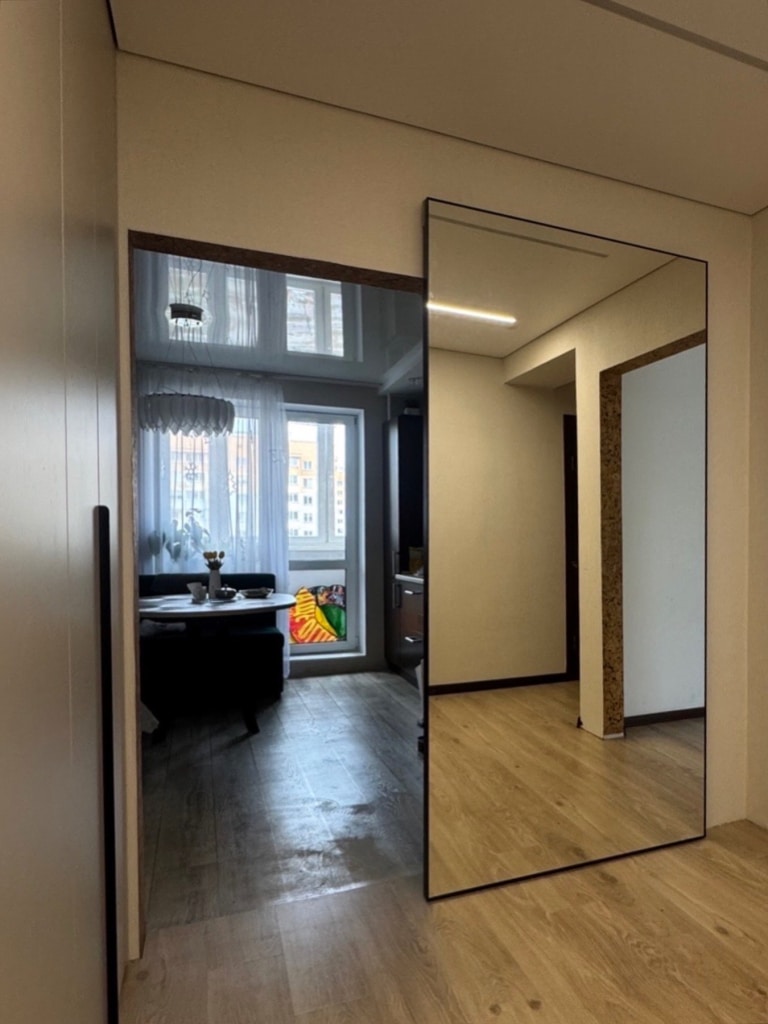
A sliding mirror panel in a hallway looks like pure decor, yet it glides aside to reveal a compact workspace. Nobody needs to know your purely aesthetic mirror doubles as a command center until you are ready for the big reveal.
Tips:
- Install soft-close mechanisms for whisper-quiet operation.
- Choose mirrors with an anti-fog coating to prevent condensation.
- Add magnetic strips behind the mirror for lightweight supplies.
- Mount a slim pegboard for vertical organization.
- Use wire management channels to keep everything clean.
Pro tip: Match the mirror frame to your existing hallway trim, so it looks decorative rather than suspicious.
17. Pantry Wall Pivot Door
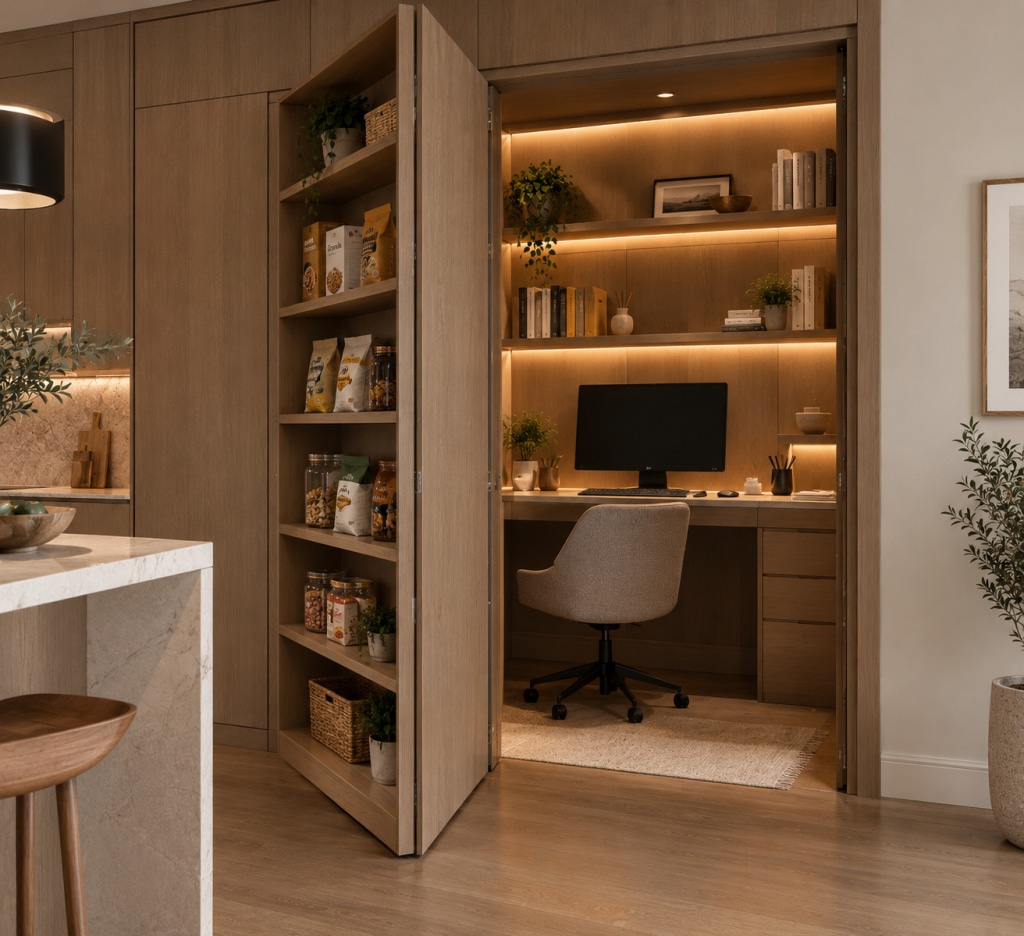
Behind what looks like ordinary pantry shelves, a pivot door swings open to reveal the dreamiest home office, like finding Narnia for productivity. Seamless wood paneling disguises the entrance, and nobody would guess a whole workspace with built-in desks and floating shelves hides back there.
Tips:
- Install heavy-duty pivot hinges rated for 200 pounds or more.
- Match the wood grain direction across the door and surrounding panels.
- Add soft-close mechanisms to prevent slamming.
- Wire electricity through the pivot point to power hidden office lighting.
- Include magnetic catches for secure closure.
Pro tip: Keep items on the pivot door shelves light, such as cereal boxes and chips instead of canned goods. It reduces strain on the hinges and lets the door glide smoothly.
18. Fireplace Mantel Fold-Out Desk
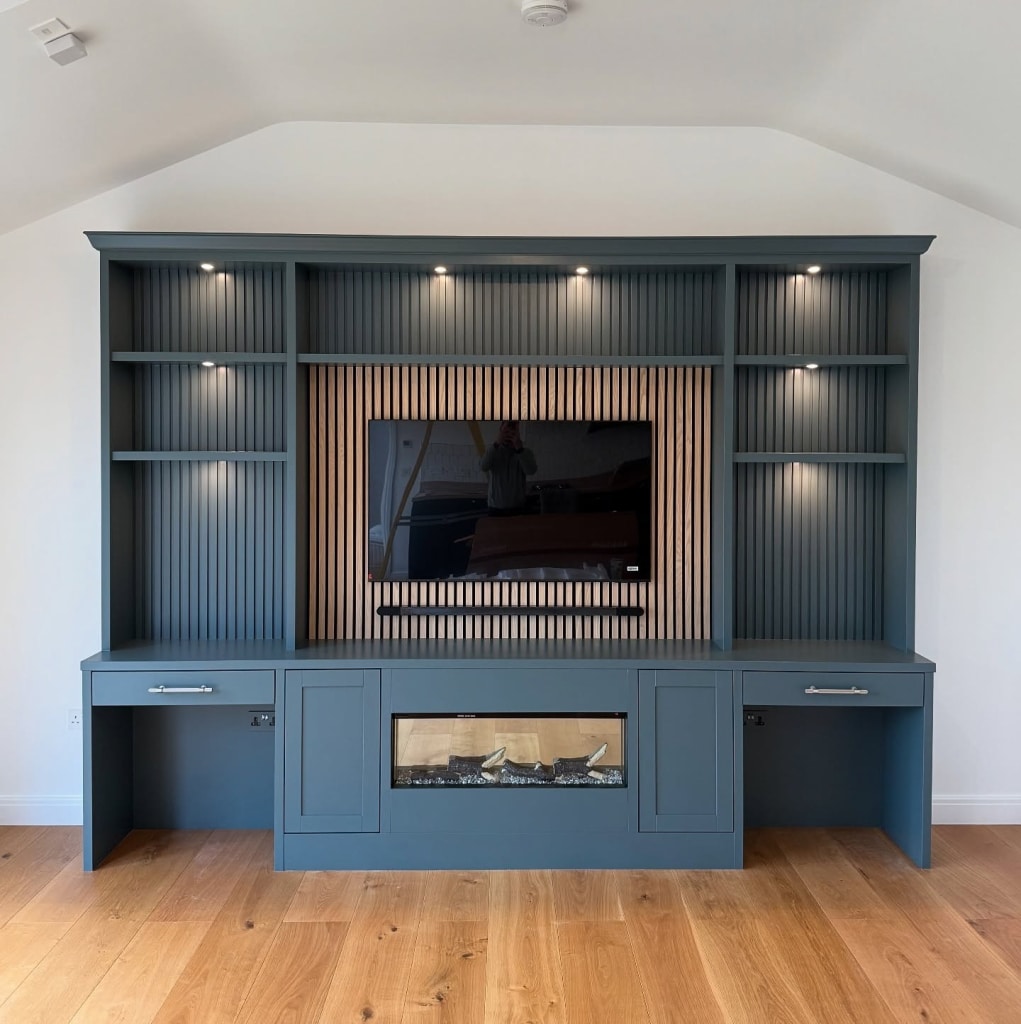
The mantel above your living room fireplace can become a sleek fold-out desk that vanishes when closed. Warm walnut wood matches the mantel, while hidden hinges and a magnetic latch keep everything flush against the wall.
Tips:
- Install soft-close hinges to prevent slamming.
- Add built-in cable management channels along the back edge.
- Choose a desktop depth of 16 to 18 inches for laptop comfort.
- Include shallow shelving inside for supplies.
- Mount a slim LED strip underneath for task lighting.
Pro tip: Make the desk’s wood tone one shade lighter than the mantel. It adds subtle contrast when open and keeps the workspace from feeling heavy against the fireplace, while still looking seamless when closed.
19. Garden Shed Workspace
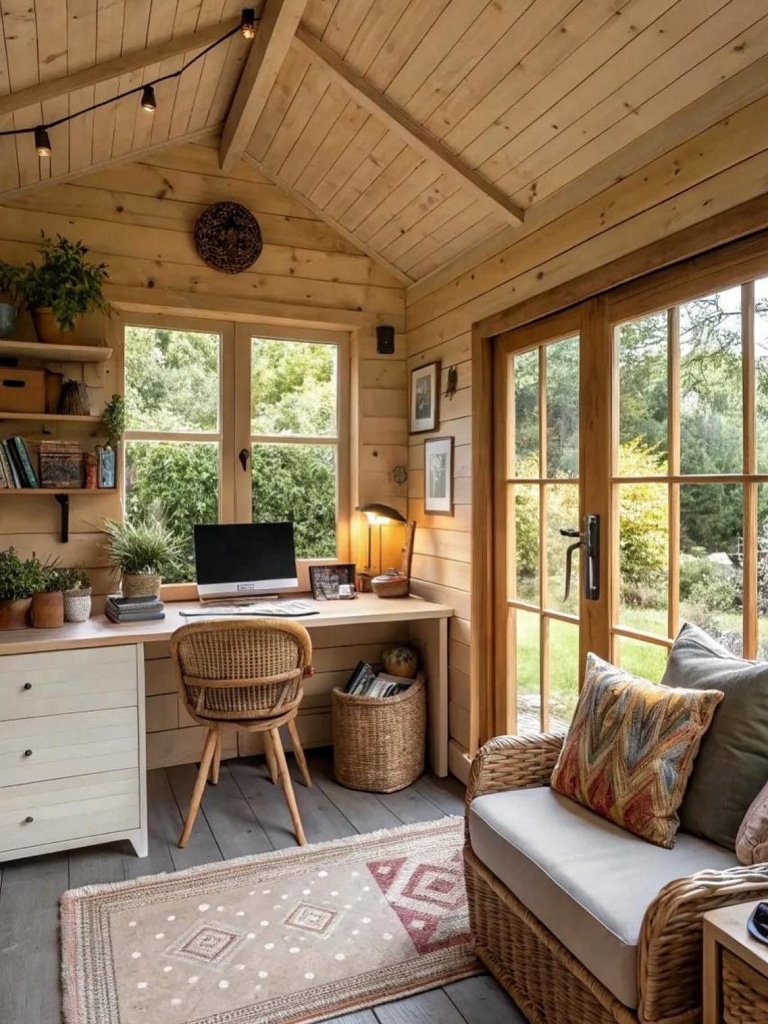
That weathered shed at the bottom of your yard has secret-agent potential. Slide open the rustic door to reveal sleek monitors, floating walnut shelves and an ergonomic setup lit by natural light through restored vintage windows. The exposed beams are painted crisp white, while the original tin roof keeps its character.
Tips:
- Install proper insulation and weatherproofing before anything decorative.
- Add skylights or larger windows for maximum daylight.
- Choose moisture-resistant furniture and seal all wood surfaces.
- Mount pegboard walls for flexible vertical storage.
- Hide a mini-split air conditioner behind decorative lattice.
Pro tip: Keep the exterior intentionally underwhelming. Peeling paint and overgrown ivy are not flaws, they are camouflage, and clients never need to know you are meeting deadlines beside the tomato plants.
20. Secret Compartment Desk
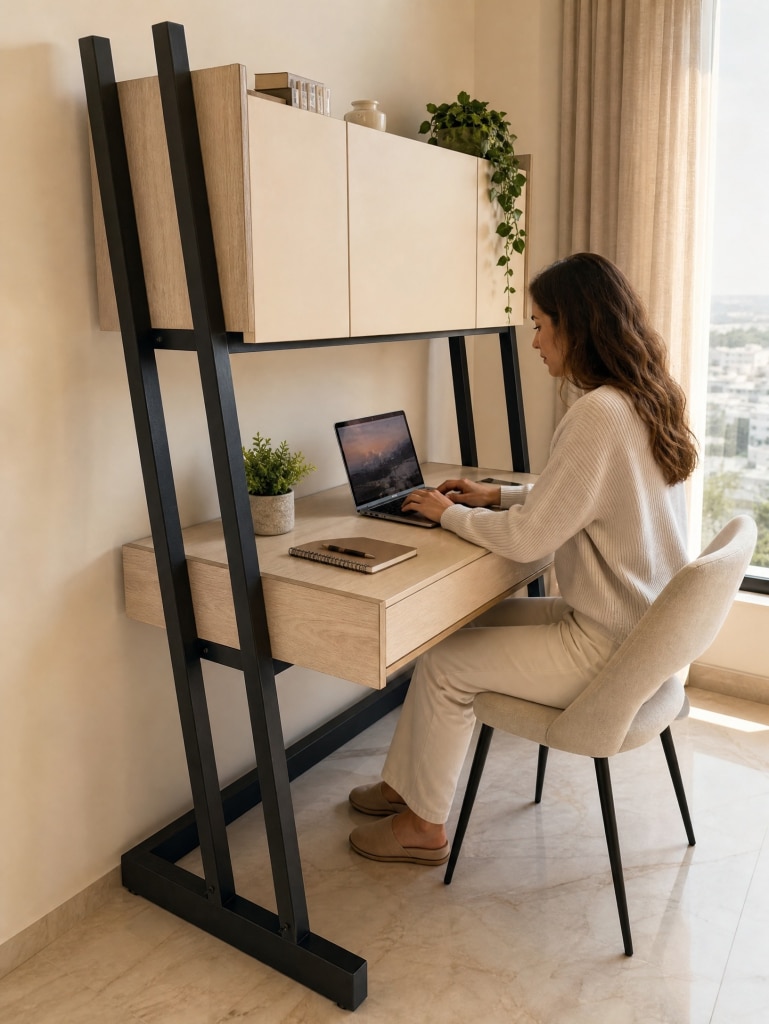
This desk hides compartments that swallow your office essentials, so the surface stays clutter-free. It blends in with your other furniture and adds a fun element of surprise. It suits anyone who values organization and a little secrecy, and it is both playful and functional.
21. Convertible Shelf Desk
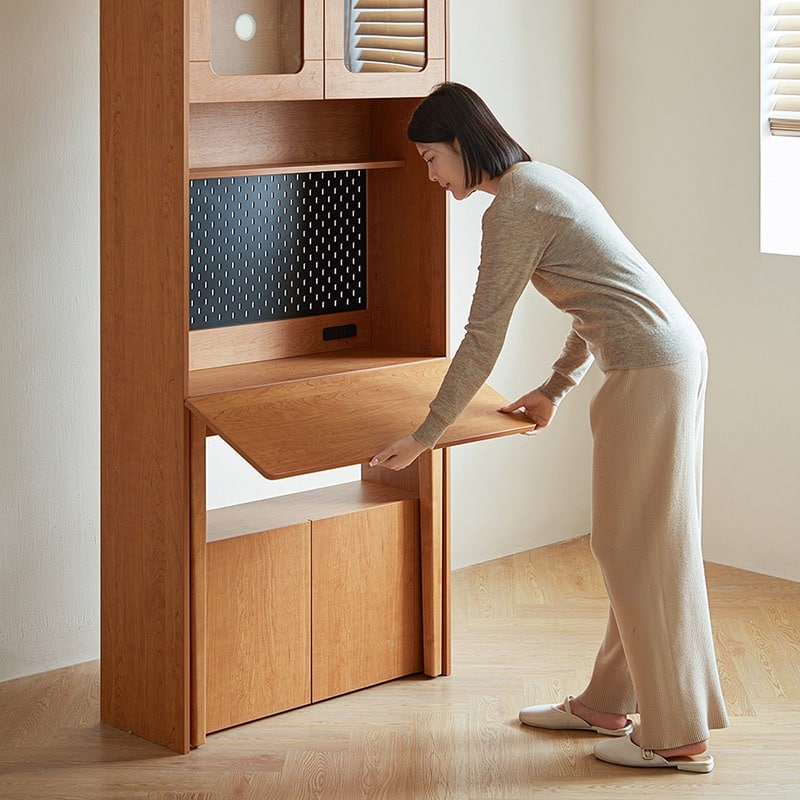
A convertible shelf turns a bookshelf into a workspace. The shelves can be rearranged or folded down to form a desk surface, so you can switch between storage and work as needed. It is ideal for small spaces and a stylish way to build a hidden desk into your home.
22. Pull-Out Drawer Desk
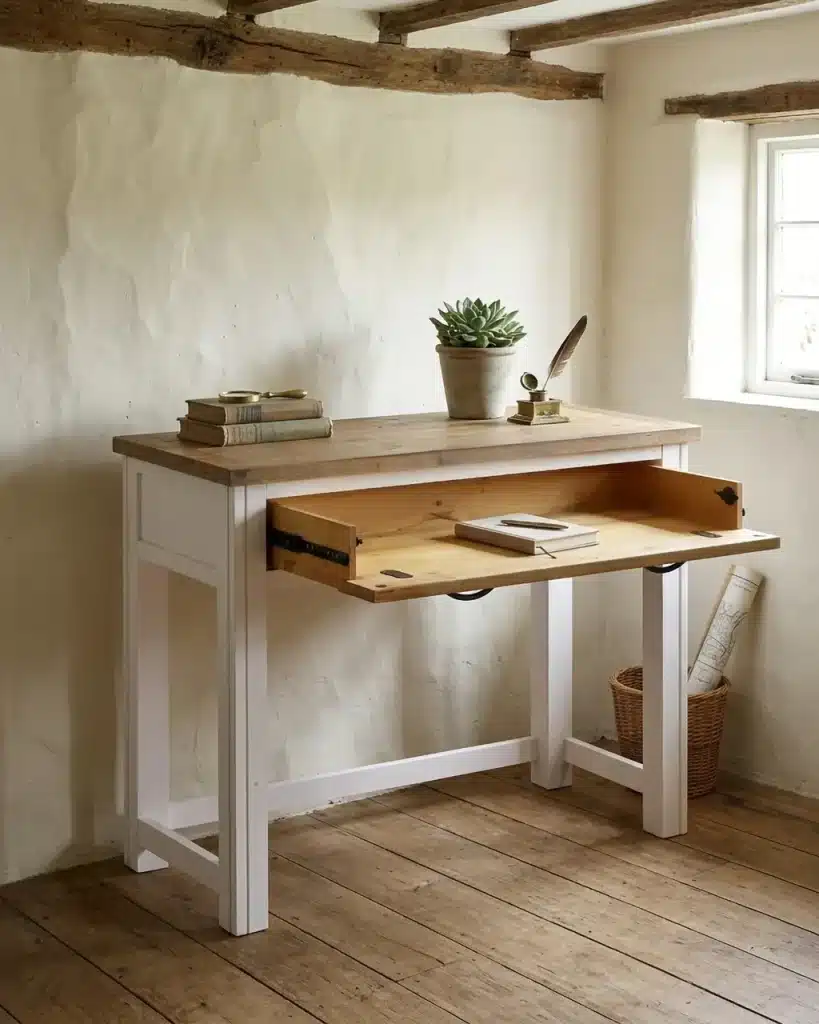
This space-saving desk lives inside a drawer. When you need to work, pull the drawer out to reveal a desk surface, and when you are done, push it back out of sight. It suits small apartments and multipurpose rooms, and it makes smart use of limited space.
23. Fold-Away Table Desk
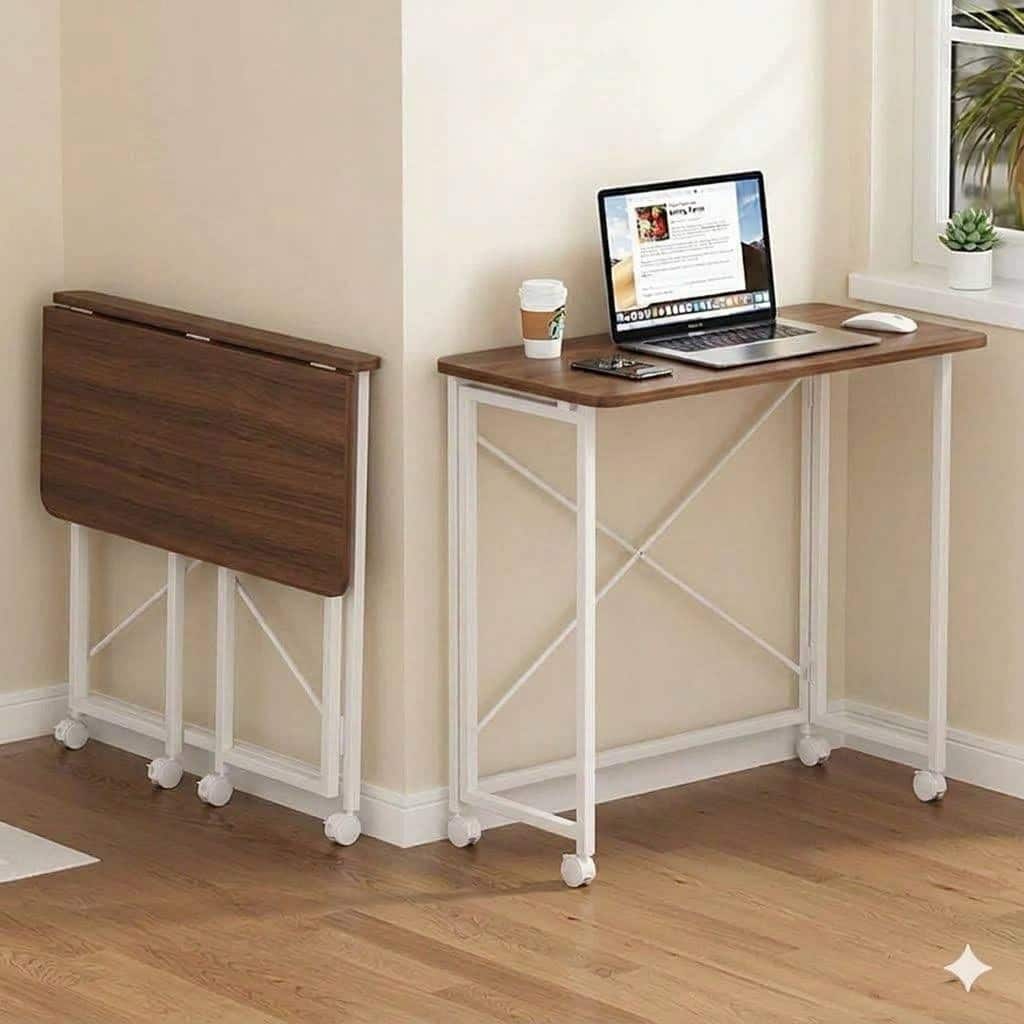
A fold-away table is a flexible desk for small spaces. Fold it up and store it when you are finished, and the floor space is yours again. It works well in multifunctional rooms where you switch between activities, and it keeps your living area clean and open while still giving you a practical, stylish workspace.
24. Hidden Alcove Desk
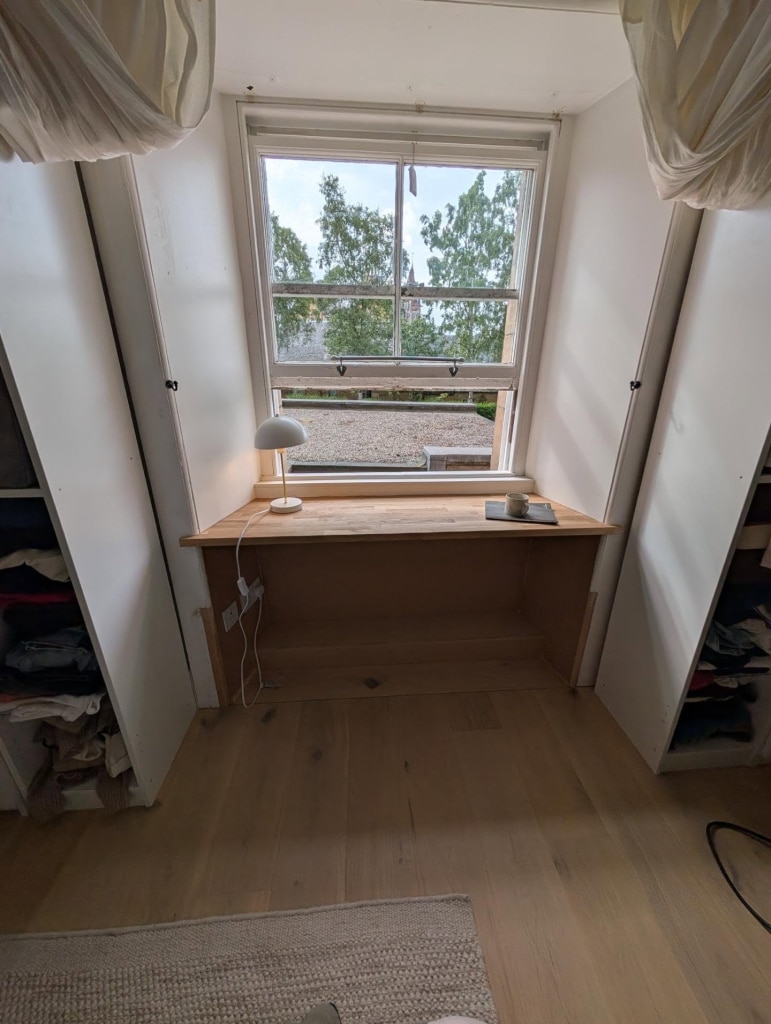
Transform a small nook into a workspace with built-in shelves and a custom-fit desk. When you are off the clock, close the alcove with a curtain or doors. It is a great way to create a dedicated work area in a small home, and it delivers both privacy and function.
25. Sliding Panel Desk
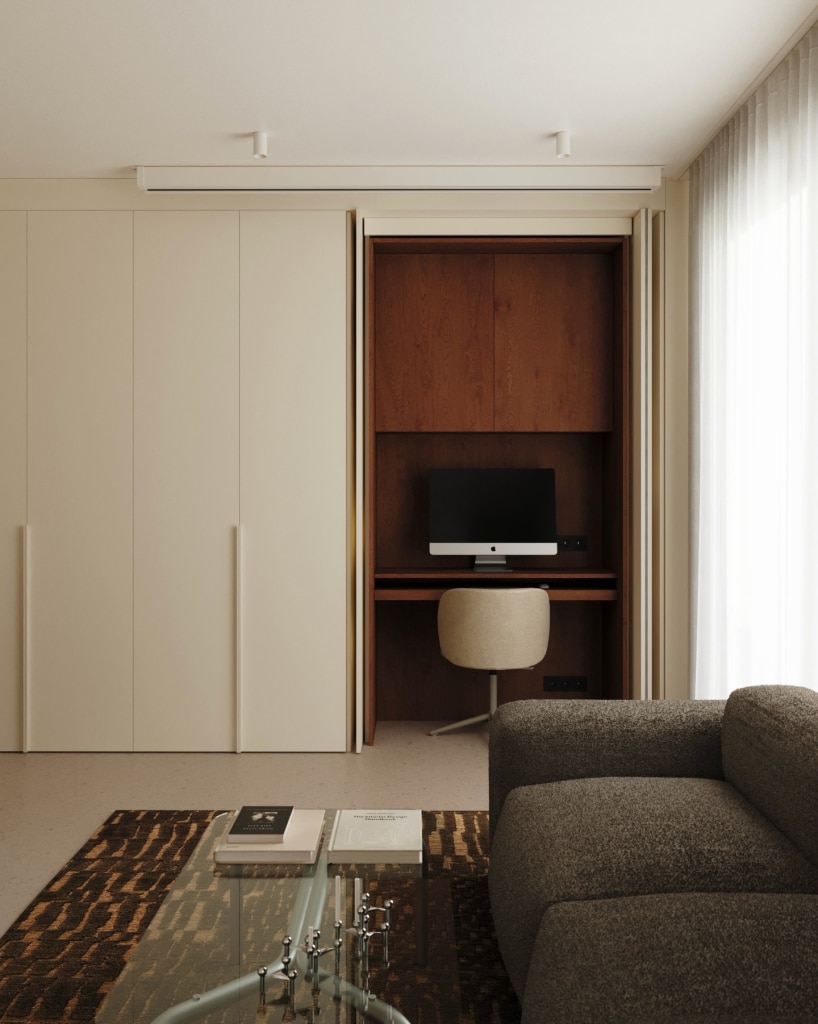
A sliding panel conceals your workspace until you need it. Slide the panel aside to reveal the desk, and slide it back when you finish. It suits contemporary homes that want to keep a sleek look, and it blends seamlessly with your decor while staying stylish and functional.
Finishing touches for any hidden office
Light low-light workspaces in layers
Layered light beats a single bright bulb in a tucked-away workspace, because one overhead source throws shadows onto your screen and keyboard. A task light at eye level or slightly above sends brightness to the work surface instead of into your eyes. A battery-powered puck light inside a cabinet or closet plus a small clamp lamp at desk height solves about 90 percent of low-light problems with no rewiring. A deep interior color lets the lighting take center stage, and crisp white trim catches light and sharpens the edge of the hidden office.
- Combine one ambient source above with one focused task lamp below so keyboard shadows disappear.
- Choose battery or rechargeable lights, such as puck lights and USB strips, to avoid the outlet scramble that ruins most closet offices.
- Aim for warm white bulbs rated around 2700K to 3000K, which reduce eye strain without washing out skin tones on video.
- Mount lights at monitor height so light bounces forward instead of down, which cuts screen glare.
Tame the cables
Loose cables make a hidden office look unfinished, even when everything else is well designed. Bundling cords before they reach the power strip cuts visible clutter by more than half and takes about ten minutes with basic supplies. A cable spine or raceway along the desk edge keeps the whole run contained, so the space looks intentional rather than improvised. Against a near-black wall, white raceways read as architectural detail rather than a cable fix.
- Gather all cords into one group at the source with reusable velcro ties before routing them along the wall.
- Stick a paintable plastic raceway along the baseboard or desk edge to hide the bundle from the front.
- Put small adhesive labels at the power strip end, so you never have to guess which device to unplug.
- Add a grommet hole or clip at the desk edge so cables leave through one clean exit point.
Make it camera-ready
A matte wall behind your desk reduces light bounce and keeps your face the focus on video calls. Smooth, flat paint absorbs overhead and ring light without the hot spots that eggshell or satin finishes create. If your wall has a sheen, one coat of flat paint is the fastest camera upgrade before your next meeting. A near-black matte accent wall removes glare, while crisp white surrounding walls bounce soft ambient light forward without the shimmer that washes out facial detail.
- Choose flat or matte finishes that absorb light instead of reflecting it into the lens.
- Keep backdrop contrast low: a wall one or two shades deeper than neutral keeps your face and shoulders clear.
- Add soft texture, such as a fabric panel, bookshelf or thin acoustic tile, to give the backdrop a layered look on screen.
- Block echo with soft materials like a rug, upholstered chair or curtain panel behind the camera, which removes the hollow reverb that makes voices sound unprofessional.


No Comments