Mark Zuckerberg just made one of the biggest bets in Silicon Valley history and left everyone wondering the same thing: Was Meta paying $15 billion for recruiting a 28-year-old founder?
Last Thursday, Meta acknowledged it bought close to half of Scale AI, a San Francisco–based data company, in a massive $15-billion deal. The deal gives Meta a 49% stake, valuing Scale AI at close to $30 billion, double the earlier valuation a year earlier.
On paper, it’s a strategic partnership for the purchase of significant data services for Meta’s artificial intelligence projects. In practice, most commentators think it’s something else: one of the most expensive “acquihires” in history.
And at the very center of the whole saga is Alexandr Wang, Scale AI cofounder and chief executive. To this point, Wang was not quite a rockstar outside of tech circles. But after the recent move by Zuckerberg, he may forever be known as “the $15 billion hire.”
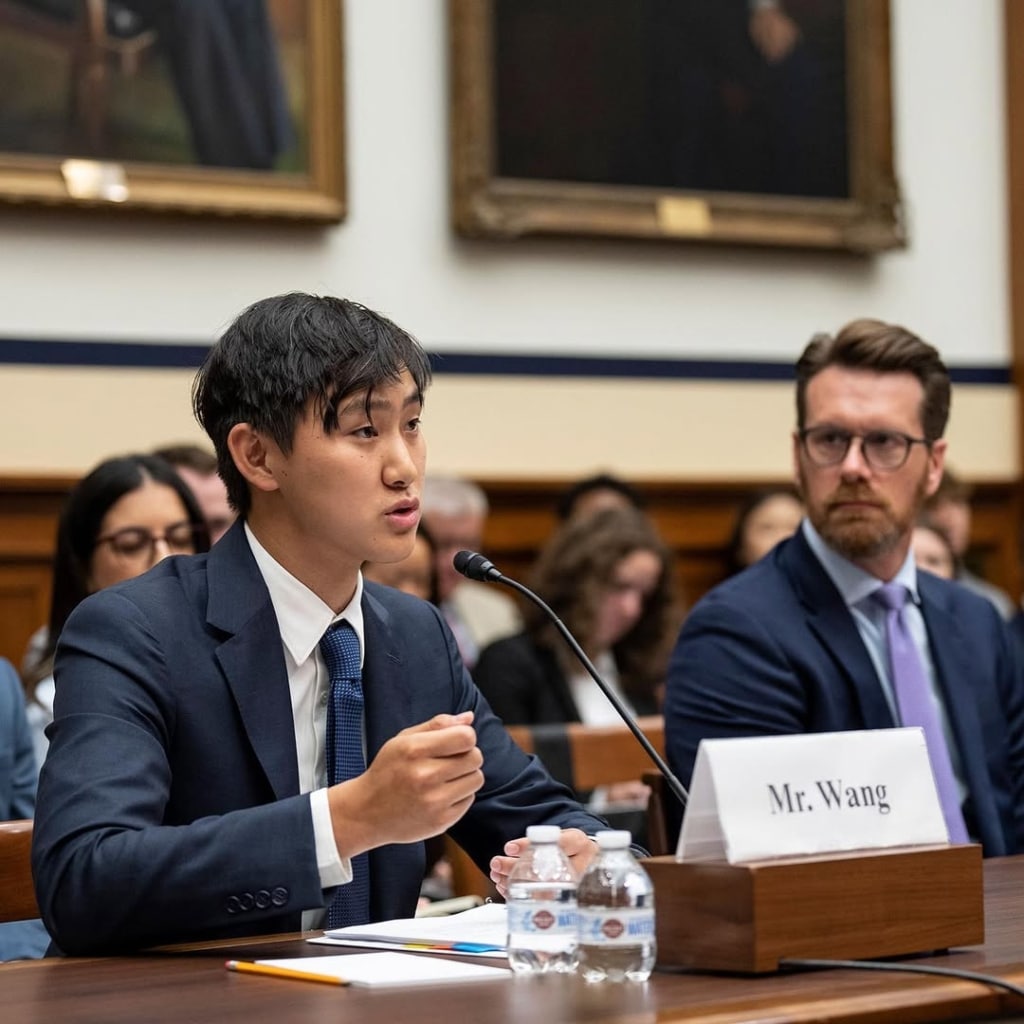
The deal that caused a sensation
Meta’s official statement framed the buyout as a collaboration. The company outrightly declared that it would deepen the work they would do together, generating data for AI models, and also reported that Wang himself would join the superintelligence work at Meta.
But the language triggered panic buttons in Silicon Valley. Why would Meta, which employs thousands of engineers and spends billions in a year on research and development, pay so much money for what appears to be… one man?
“A very expensive acquihire of Alexandr Wang,” tech commentator Ben Thompson wrote, in a view that became the consensus wisdom in a short time around the business.
What’s an acquihire, anyway
“Acquihire” is the Silicon Valley term of art for a transaction in which a larger business acquires a smaller startup not for the product or service but for the humans.
The existing business of the startup typically dies off once the papers are signed; the point is that the brains are being assimilated by the larger business.
Acquihires provided stagnant startups a “soft landing” for years. Employees and founders got jobs, investors recovered a portion of the funds, and corporations filled holes in their rosters.
The deals dwindled in recent years, however, as President Biden’s antitrust enforcers complicated mergers and acquisitions.
They’re now coming back in a major way, thanks to the boom in AI, and asking for price tags previously unthinkable a few years ago.
Last year, Microsoft paid a reported $650 million for rights in AI startup Inflection in a deal largely understood as a move to buy cofounder Mustafa Suleyman.
Google reacted by signing a $2.7 billion deal with Character.AI, a company largely owned by the founder, Noam Shazeer, and his team, with a goal to acquire their expertise.
Alongside those sorts of figures, the $15 billion deal by Zuckerberg looks more moonshot than playbook.
Why Alexandr Wang?
That’s the enigma. Wang is certainly remarkable: a 28-year-old man who founded a data-labeling startup whose datasets are bought by giants like OpenAI, Meta, and Tesla. But he’s not the type of high-level AI scientist Meta once poached with grand packages.
He is essentially a businessman with technical abilities, not the kind of first-rate researcher Zuckerberg was lavishing in the recent years with funds and hints at multimillion-dollar payouts. So why would he so desperately want him?
Some point to comparisons with Apple’s 2014 $3 billion acquisition of Beats, a transaction widely perceived as more about buying music legend Jimmy Iovine and placing him in Apple’s universe than about headphones.
In short, at times, the best checks in Silicon Valley are not for lines of code but for aura and vision.
A noteworthy development
Of course, Zuckerberg’s been here before with varying degrees of success. Instagram cofounders Kevin Systrom and Mike Krieger bailed years after Meta bought their app for $1 billion. WhatsApp founders also quit after they sold the app to Meta for $19 billion.
If history is any guide, then Mark Zuckerberg just possibly spent $15 billion for a flight risk.
Or does it transcend even that?
Not everyone thinks this is strictly about Wang. Meta’s ambitions in artificial intelligence are giant, and Scale AI’s bread and butter for making progress towards general artificial intelligence.
The bigger picture: AI, whatever the cost
At the end of the day, though, the question remains: would Meta have spent anything like $15 billion without Wang’s assent to ride along?
In an environment like the Bay Area, perception and momentum can matter alongside pure tech; investing in a rising star such as Wang might very well be money well spent. Meta can afford the long view.
Mark Zuckerberg is seriously convinced about the future, not just in terms of his company Meta, but of technology in general, too, being AI. When all this is taken into account, the prices we can conclude that any price may appear reasonable.
What comes next?
Whether this proves a wise investment or a rather costly misjudgment can only be known years down the line. If Wang propels Meta a decade forward in the battle for supremacy in AI, $15 billion will seem cheap.
If he exits a few years down the line, Zuckerberg will once again find himself having to account for why billions went down the drain in the pursuit of genius. For now, the rest of Silicon Valley will be watching closely.
Not just because of the eye-popping numbers, but because the deal could set a new benchmark. If $15 billion is what it costs to secure one 28-year-old founder, what happens when the next wave of AI prodigies comes knocking?
That is, $15 billion might not merely be the cost of Alexandr Wang, but the new standard price for ambition during the era of artificial intelligence.