Browse 25 outdoor office ideas, from a $200 balcony nook to an insulated garden studio, and pick the setup that suits your space, wallet, and work style.
Skipping the commute is a clear win, but if your “office” is really a kitchen counter, a bedroom corner, or a spot on the family sofa, you have probably noticed that being at home and getting good work done at home are not the same thing.
Many remote workers never realize that the best desk in their property may sit beyond the back door. This guide presents 25 options for small and large spaces alike, with price tags ranging from a $200 balcony arrangement to a fully insulated garden studio.
Group 1: Enclosed and Partly Enclosed Structures
These give the strongest shelter and can be used in every season. They demand the biggest outlay, but they offer the most complete outdoor working experience.
1. Prefab Garden Office Pod.
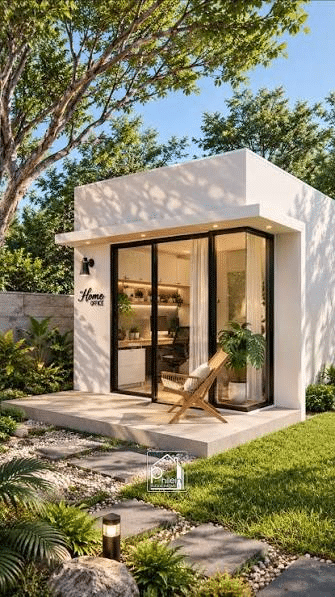
A factory-made, fully insulated unit that is delivered and set on your lawn ready to use. Current models come with full-height glass, built-in wiring, and finishes comparable to a conventional office. Ideal for: people who want a permanent, professional-grade workspace. Cost: $8,000–$35,000.
2. Converted Shed Office.
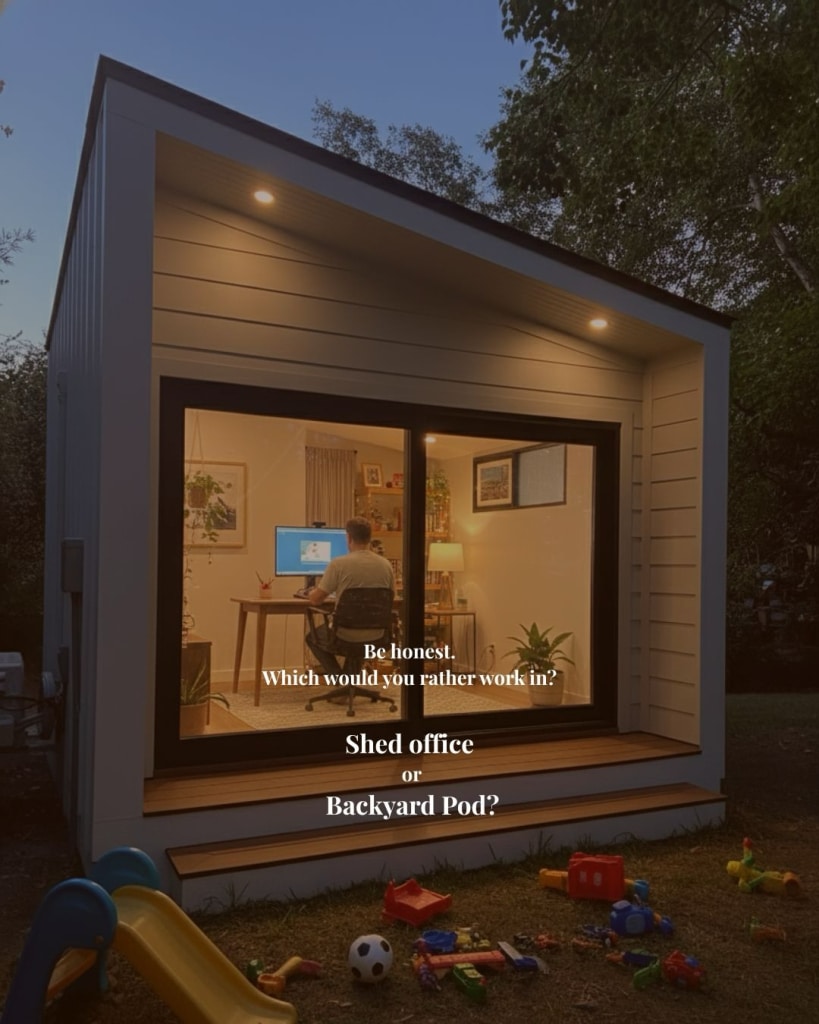
An ordinary garden shed upgraded with insulation, interior wall lining, electrical wiring, and thoughtful design. For anyone who already owns a shed, this is the best return on a conversion project. Ideal for: hands-on homeowners who would like to give an existing building a new job. Cost: $500–$5,000.
3. Backyard Office Cabin.
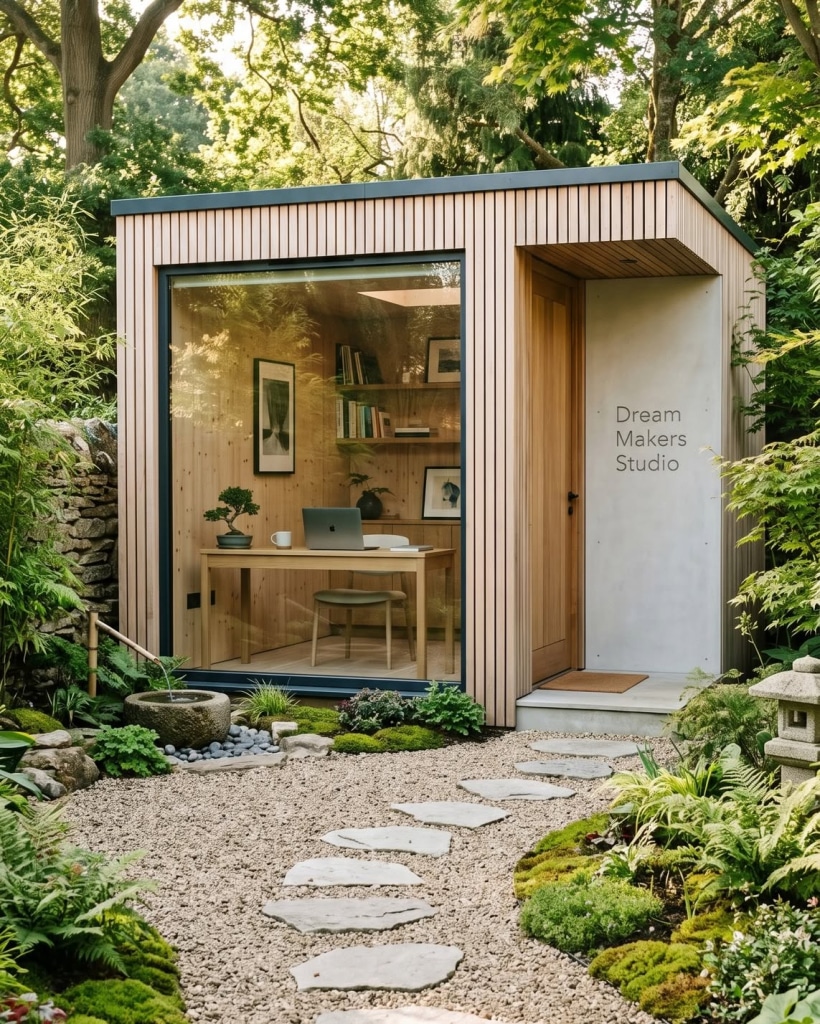
A bespoke or kit-built timber cabin made specifically for work, with bigger windows, better insulation, and sturdier foundations than a converted shed. Ideal for: remote workers settling in for the long haul. Cost: $10,000–$50,000 or more.
4. Greenhouse Office Conversion.
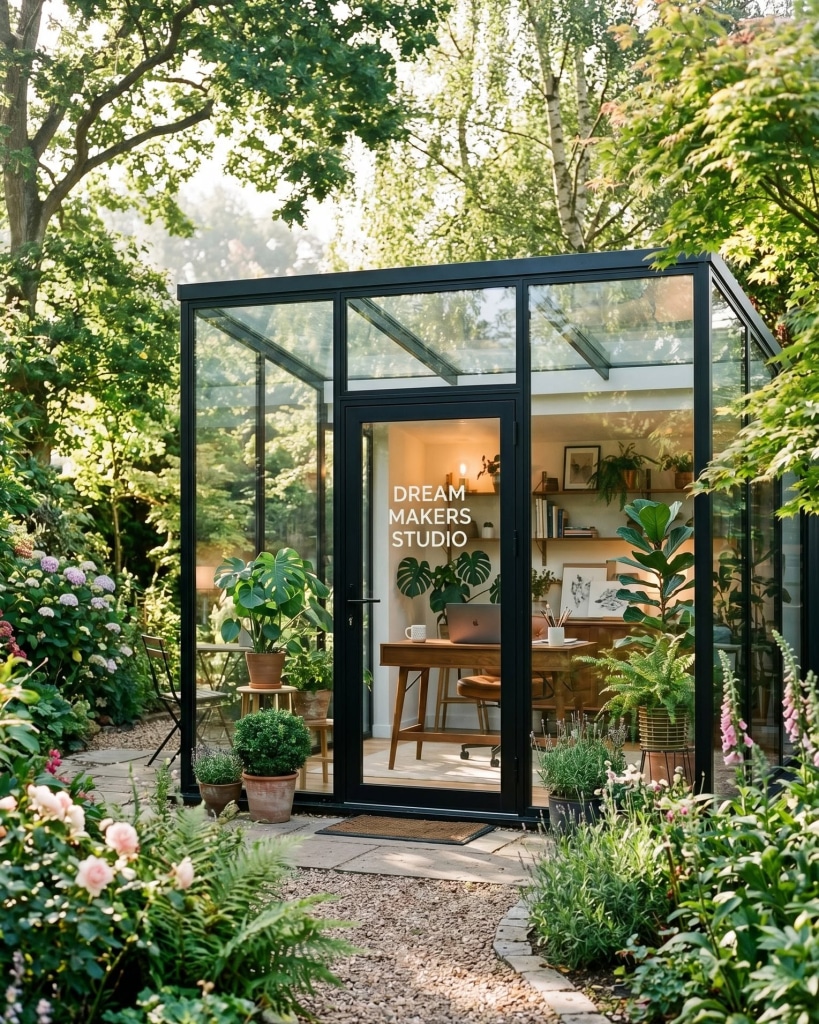
A glass or polycarbonate greenhouse reborn as a leafy, sunlit place to work. Sitting inside one feels like being surrounded by a living garden, with soft visuals and a calm soundscape. Ideal for: creative professionals and plant lovers. Cost: $1,500–$8,000. Important: fit roof vents and shade cloth, because without active airflow a greenhouse becomes extremely hot in summer.
5. Timber-Frame Studio With Glass Walls.
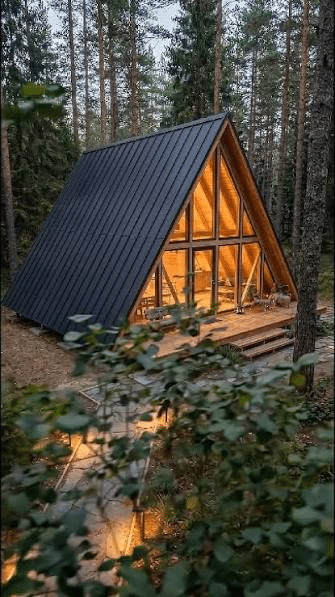
A custom wooden frame fitted with large glass panels, pairing natural warmth with plenty of daylight. It works as a striking architectural feature of the garden as well as an office. Ideal for: design-minded professionals who want an impressive backdrop for video calls. Cost: $15,000–$60,000 or more.
6. Shipping Container Office.
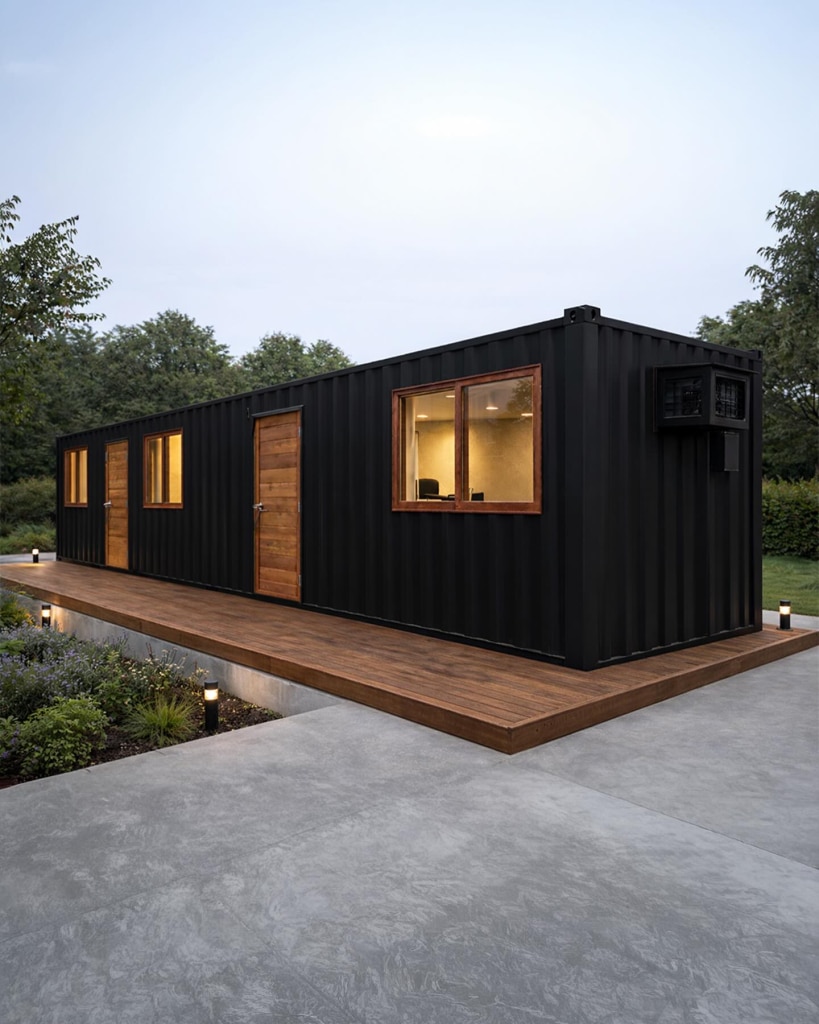
A retired steel freight container fitted with cut-out windows, insulation, wiring, and interior finishes. It has an industrial look, it is very sturdy, and a truck can bring it to remote sites. Ideal for: fans of stripped-back industrial style. Cost: $8,000–$25,000 once fully converted.
7. Treehouse Office.
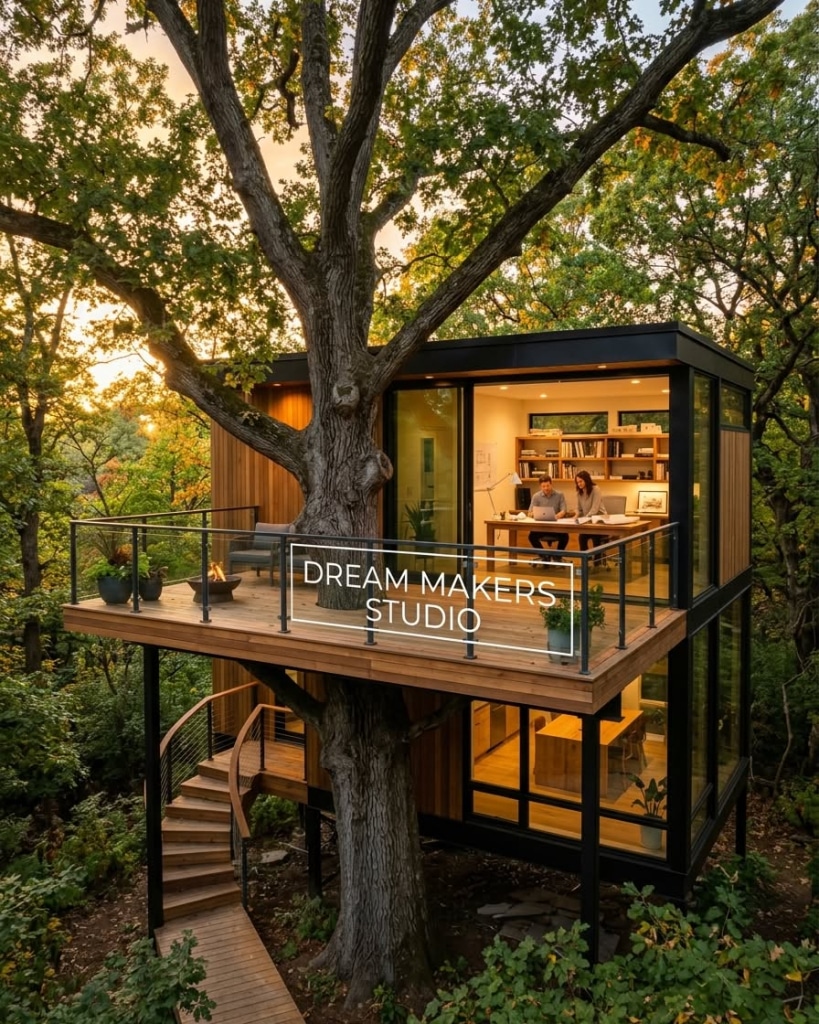
A raised platform built around mature trees, mixing one-of-a-kind atmosphere with real practicality. The trees need trunks at least 12 inches across, and the mounting hardware should be approved by an arborist. Ideal for: creatives who work in short, concentrated bursts. Cost: $5,000–$50,000 or more, depending on complexity.
8. Insulated She-Shed or He-Shed Creative Studio.
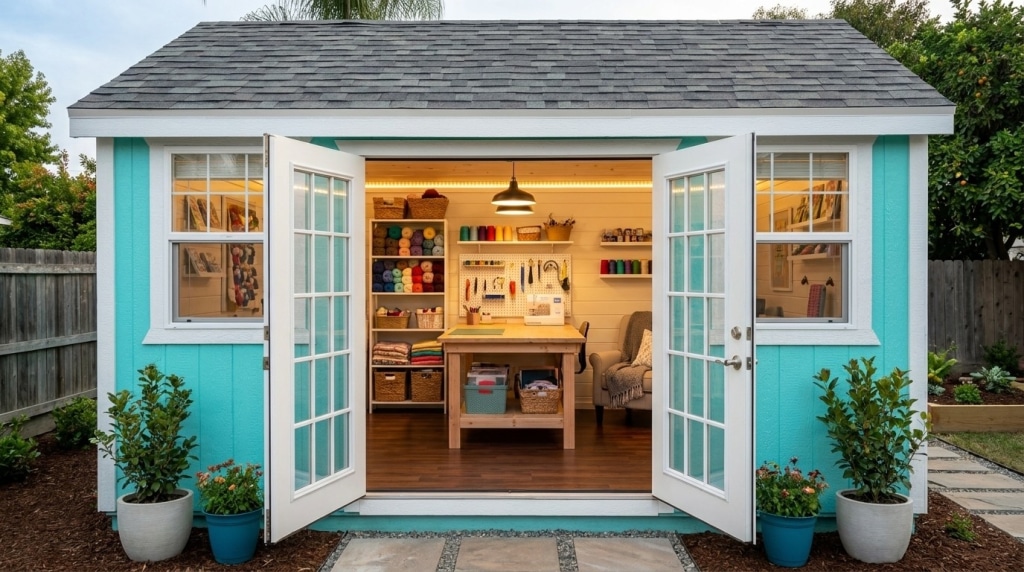
A garden-shed-style hideaway that is fully insulated and furnished to reflect its owner instead of following generic office norms. Imagine gallery walls, houseplants, vintage furniture, and curated shelves. Ideal for: writers, artists, and therapists. Cost: $1,000–$8,000.
Group 2: Roofed Outdoor Workspaces
These shelter you from the weather without sealing you in. They keep a true outdoor feel and cost less, with fewer permit headaches, than the enclosed options.
9. Pergola Office With Retractable Shade.
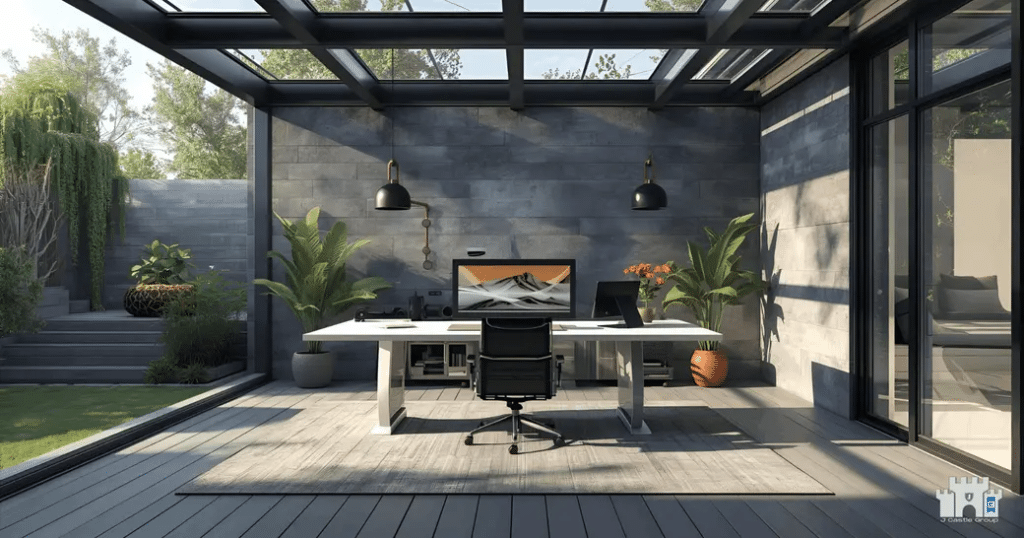
A freestanding or wall-mounted pergola topped with a retractable fabric canopy or motorized louvered roof. It gives a shaded, wind-sheltered zone that adjusts as conditions shift during the day. Ideal for: homeowners with a patio who want a major upgrade without building something permanent. Cost: $1,500–$8,000.
10. Covered Patio Desk Setup.
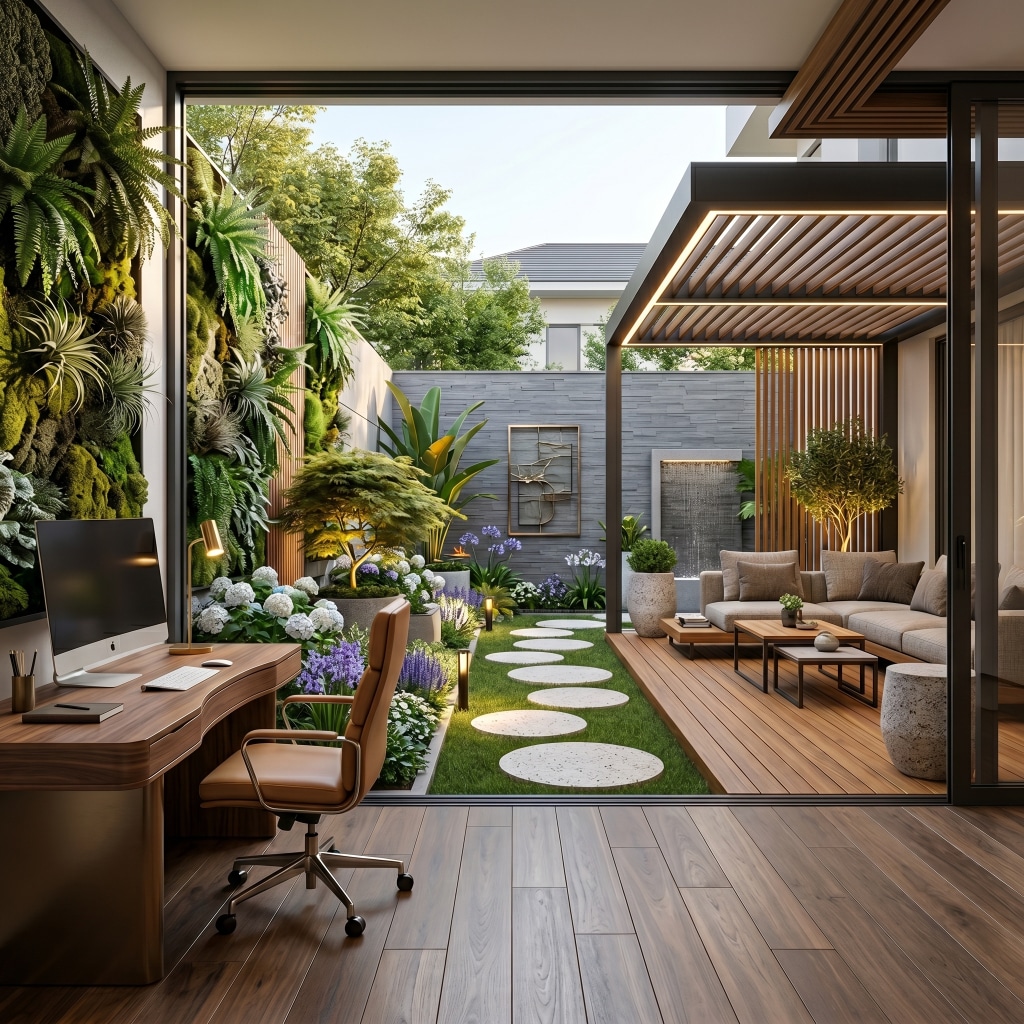
A roofed patio you already own, taken seriously as a workspace: a purpose-made outdoor desk, a supportive weatherproof chair, tidy power cabling, and a Wi-Fi extender. It is the quickest route into outdoor working. Ideal for: anyone ready to start this week. Cost: $200–$800.
11. Sail Shade Outdoor Office.
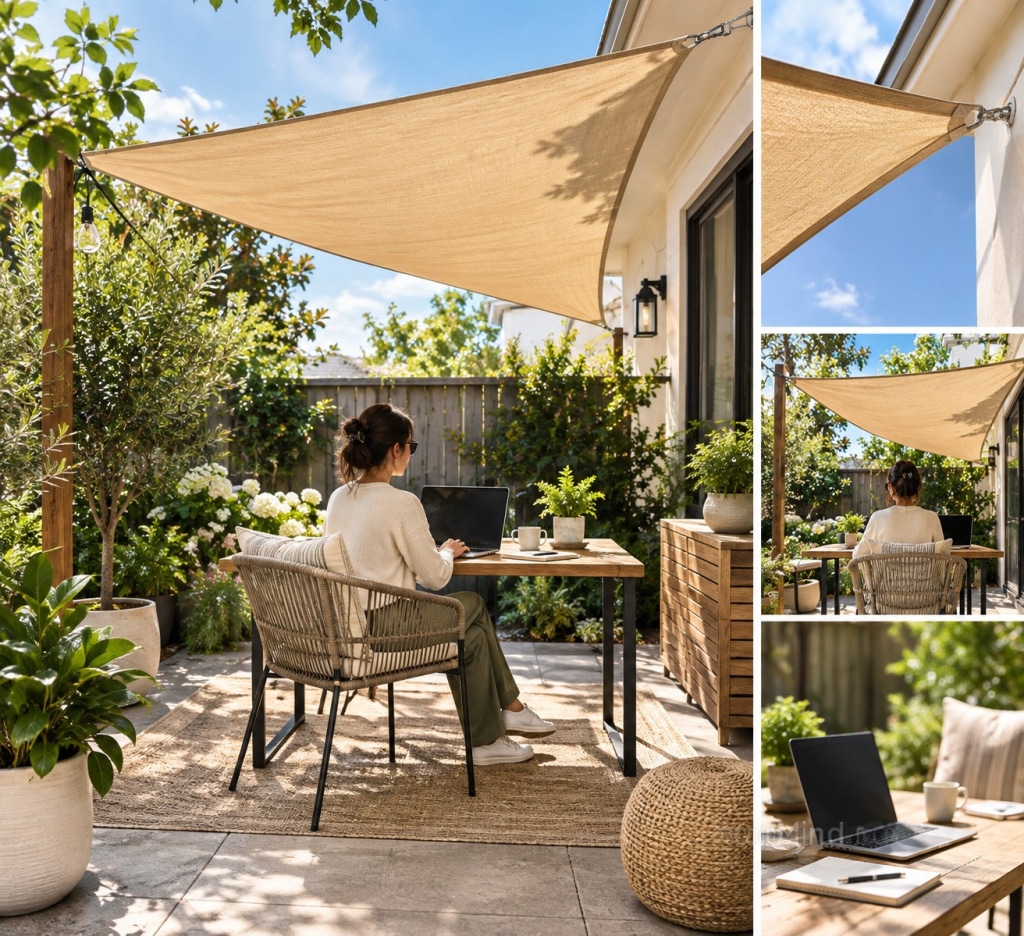
Tensioned, UV-blocking fabric sails hung at an angle over a work area, producing overlapping shade without the price or permanence of a pergola. Renters can use them, and they come down easily for off-season storage. Ideal for: budget-minded homeowners and tenants. Cost: $150–$600.
12. Gazebo Workspace.
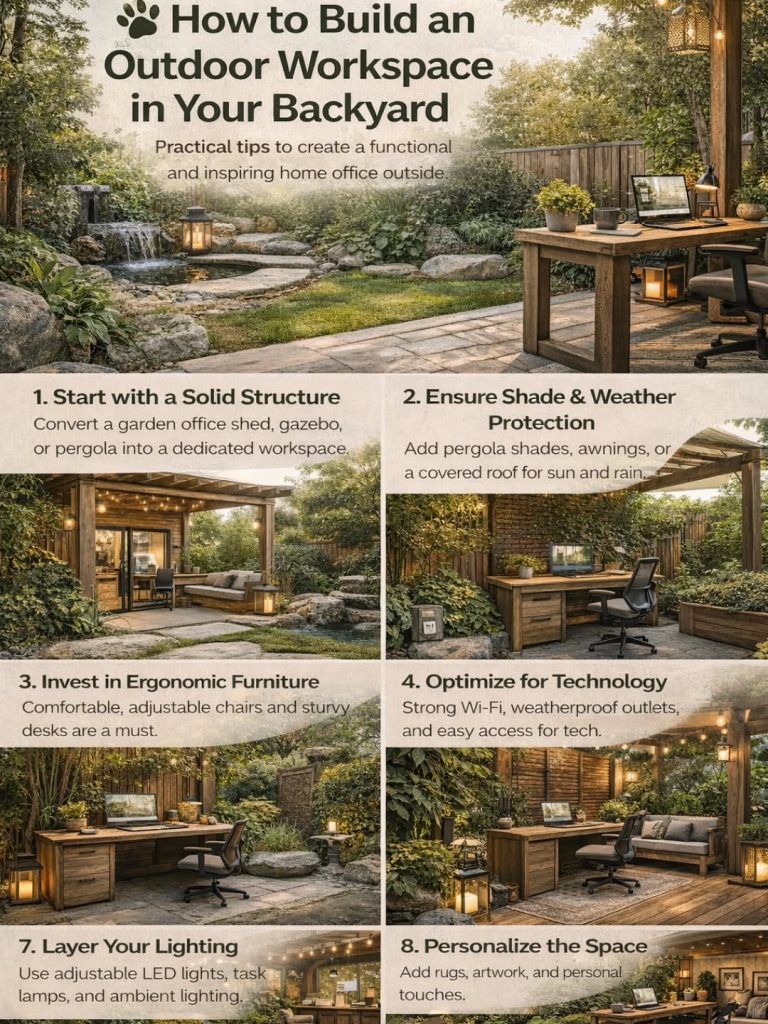
A freestanding garden gazebo furnished for work, with weatherproof curtain panels hung on the exposed sides. The curtains repel light rain, give privacy during video calls, and create a genuine sense of place. Ideal for: homeowners who want a defined, room-like outdoor area. Cost: $500–$3,000.
13. Lean-To Greenhouse Studio.
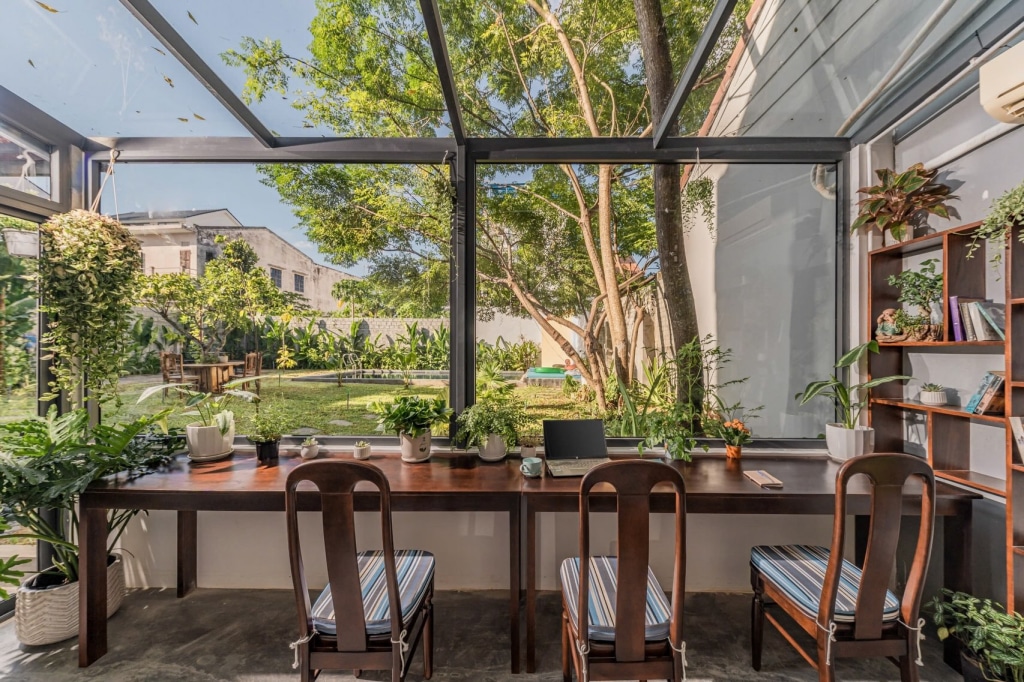
A polycarbonate greenhouse built against an outside wall of the house, forming a bright, plant-filled extension that shares the house’s electricity and Wi-Fi. Ideal for: narrow gardens and people who want a close link between indoors and out. Cost: $800–$5,000.
14. Carport Office Conversion.
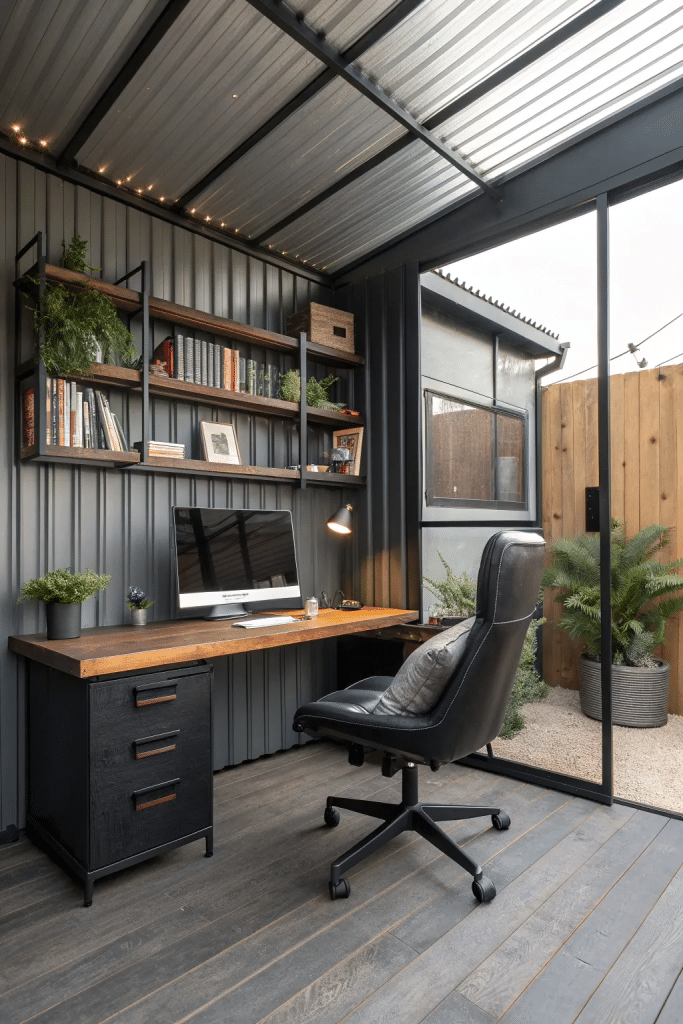
An existing carport fitted with side screens, a proper desk, seating, and an outdoor extension cord. Its current roof supplies the shelter, so a daily workspace costs very little. Ideal for: owners of carports that sit idle. Cost: $300–$1,500.
15. Outdoor Pavilion With Side Panels.
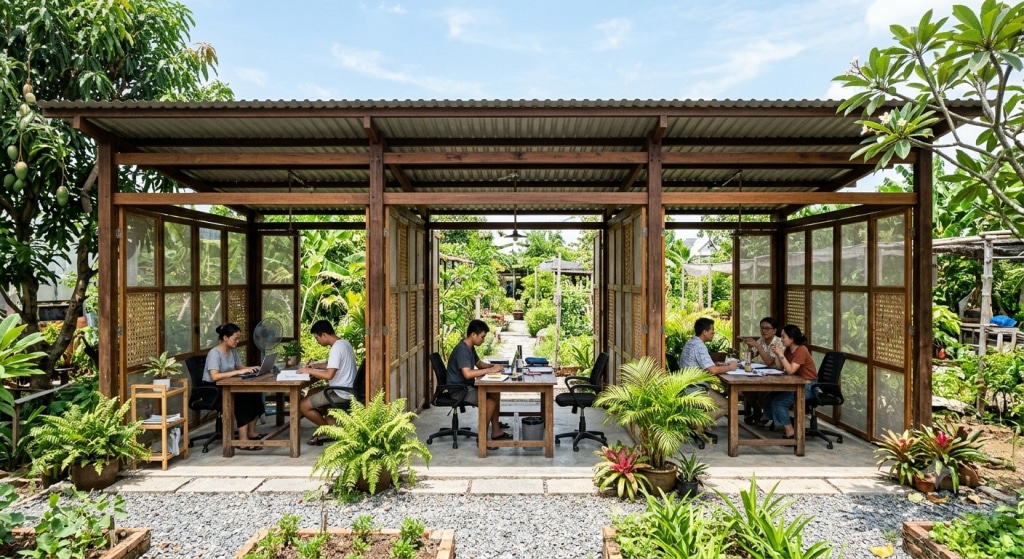
A freestanding garden pavilion with a fixed roof and optional solid or fabric side panels. The result is a semi-enclosed area that blocks wind, offers privacy, and feels like a real room. Ideal for: people who want sturdier protection than a pergola gives without constructing a whole cabin. Cost: $2,000–$8,000.
Group 3: Open-Air and Minimal Setups
These need the smallest investment. They suit mild climates and shorter, focused stretches of work.
16. Garden Bench and Side Table.
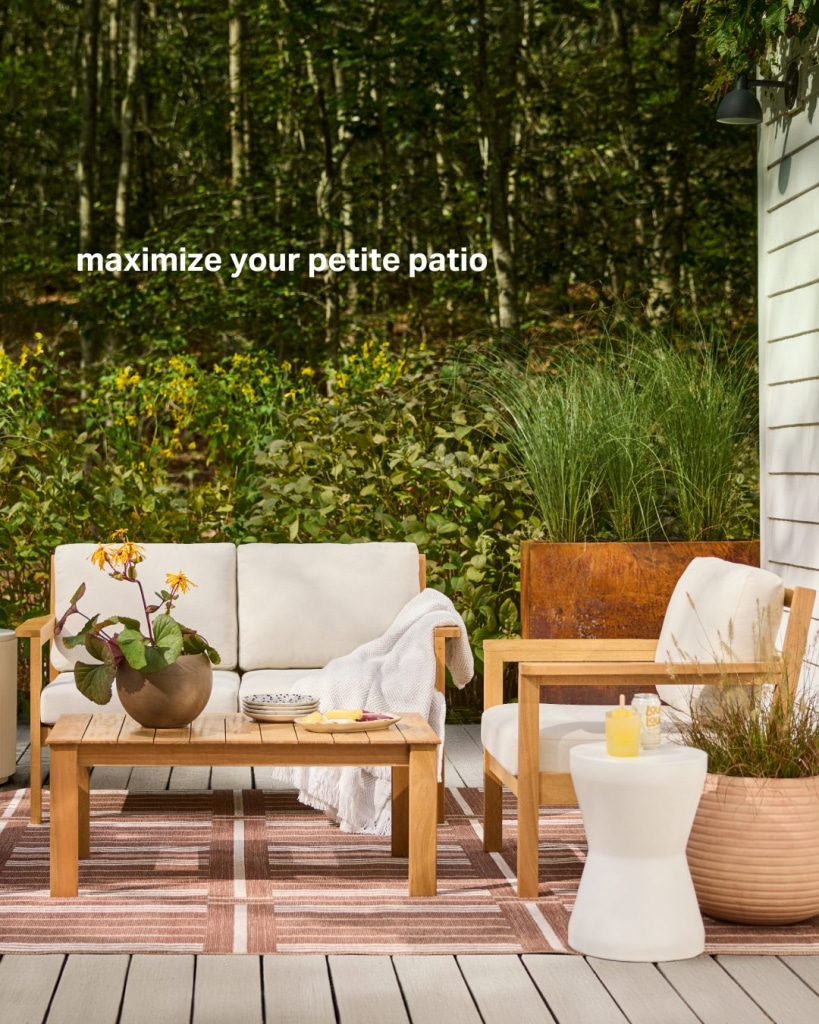
A good weatherproof bench placed beneath a tree or beside a flower border, with a side table and a portable laptop stand. It is simple, easy to commit to, and lovely for writing or thinking. Ideal for: writers and creatives who work in short, absorbing sessions. Cost: $150–$600.
17. Deck Corner Nook.
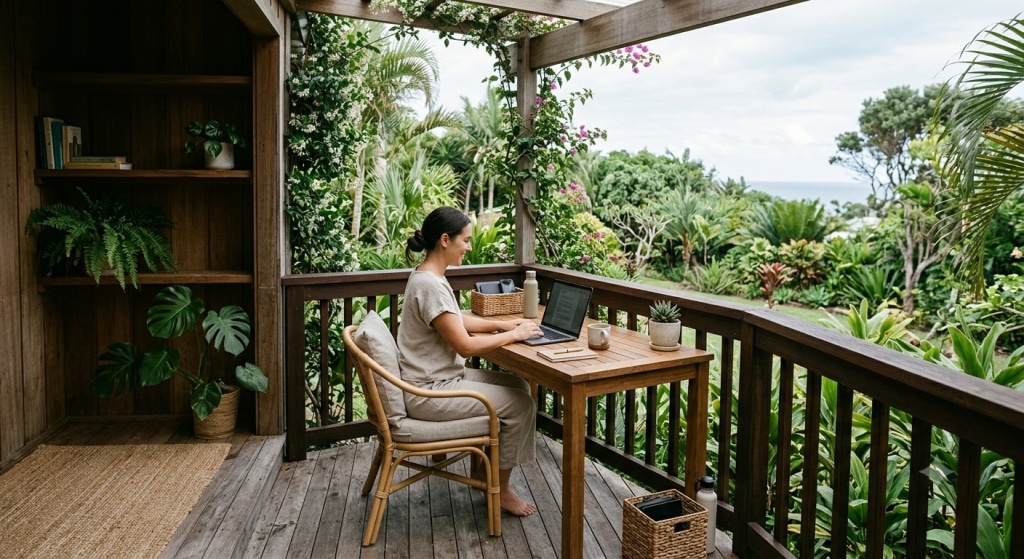
One corner of your deck marked out with an outdoor rug, potted plants as natural dividers, and purpose-made outdoor desk furniture. These visual cues say “this is my work zone” without any construction. A tip: place the desk so the sun is behind you, which removes screen glare straight away. Ideal for: deck owners who want a dedicated area without adding a structure. Cost: $300–$1,000.
18. Balcony Office for Apartment Living.
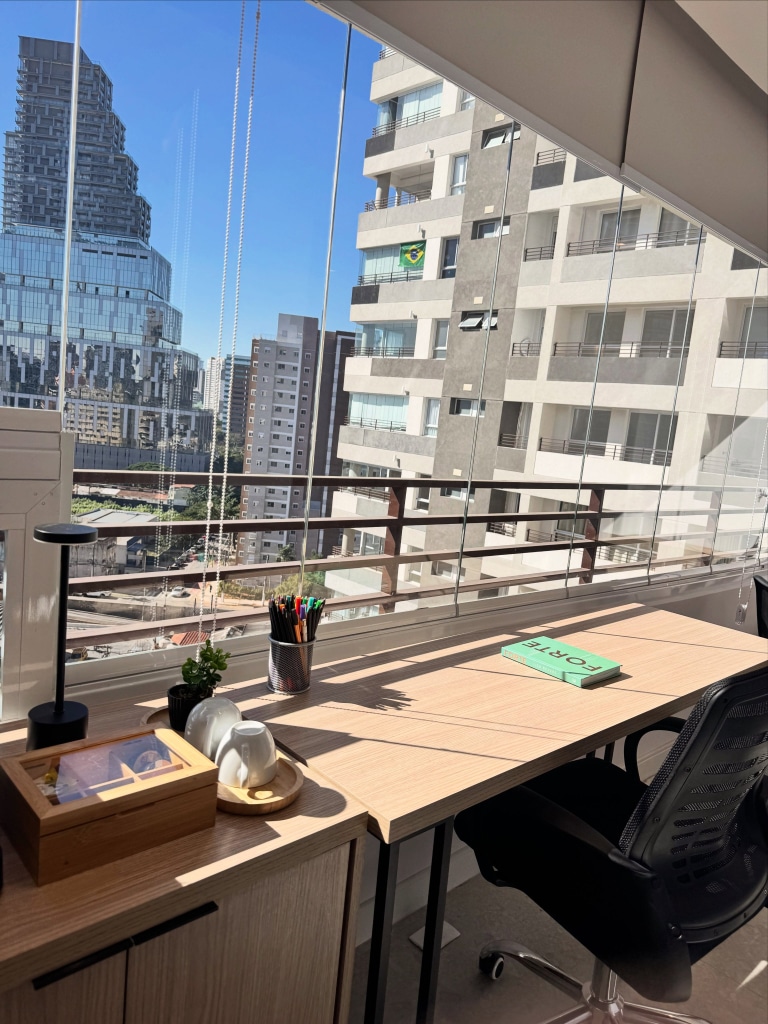
A well-equipped balcony featuring a wall-mounted fold-down desk, a compact weatherproof chair, railing planters for privacy, and a Wi-Fi booster close to the balcony door. Ideal for: renters and condo owners with no yard. Cost: $200–$700.
19. Hammock Office.
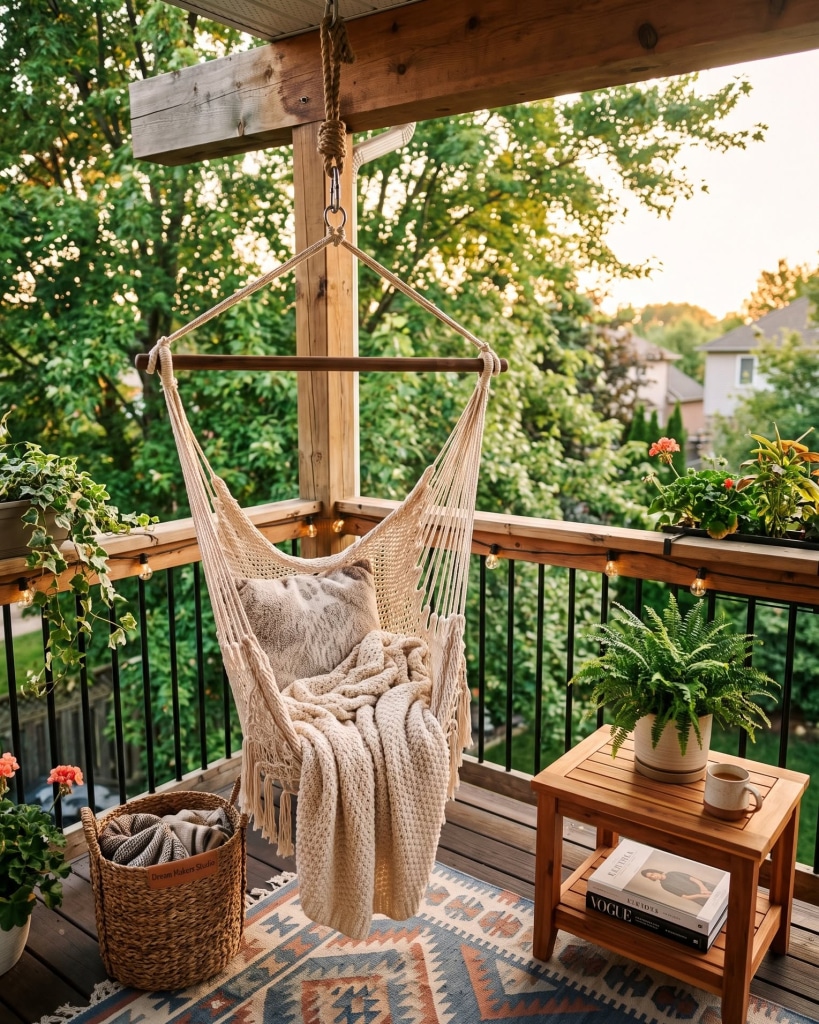
A rope hammock or hanging chair used on purpose as a change of scenery for reading, brainstorming, and audio-only calls. Working while lying back and swaying gently engages your mind differently than sitting at a desk, which can help you push through an afternoon slump. Ideal for: extra creative sessions, not as a main workstation. Cost: $50–$300.
20. Rooftop Terrace Workspace.
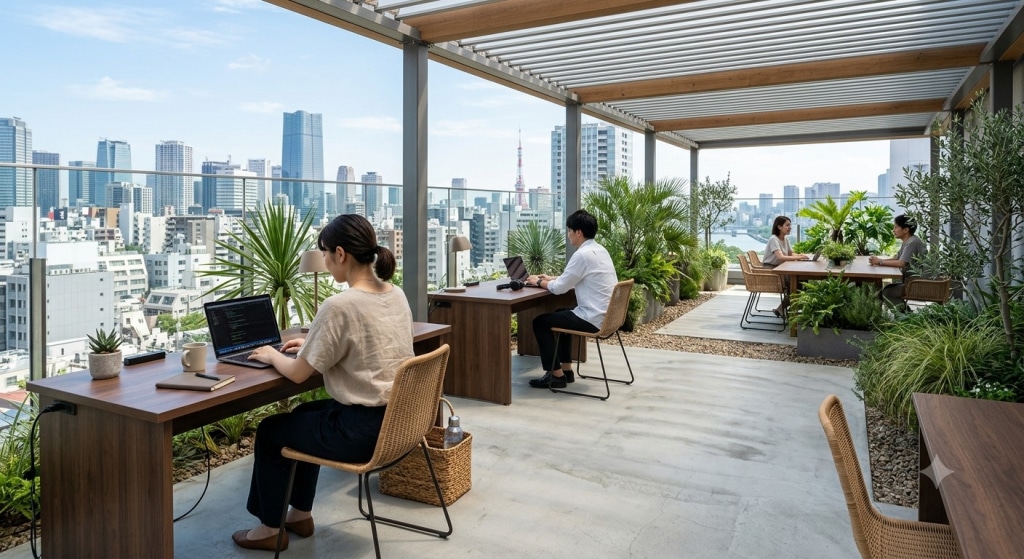
A flat roof or terrace, legally accessible, turned into an open-sky office with weather-resistant furniture, planter screens for privacy, and a portable Wi-Fi booster. The height brings breezes and views, and puts you well away from street-level distractions. Ideal for: city homeowners with roof access. Cost: $500–$3,000.
Group 4: Themed and Creative Concepts
Here, design personality comes first. These spaces inspire through mood and sensory detail.
21. Boho Outdoor Office.
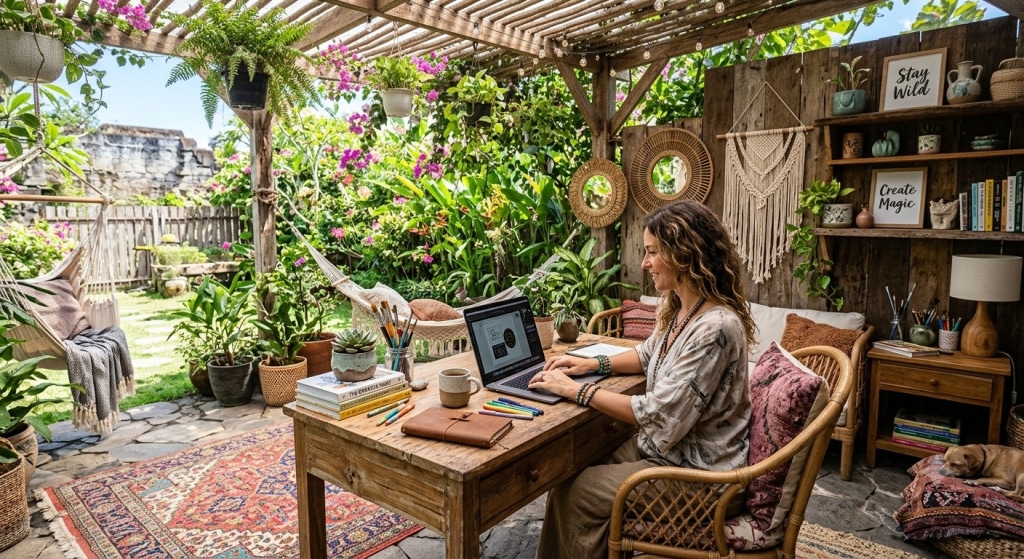
A covered patio or pergola styled with macramé wall hangings, trailing greenery, warm rattan seating, earthy cushions, and string lights. It is rich in sensory detail, visually lively, and makes a great video-call backdrop. Ideal for: creative professionals who do their best work in deliberately styled surroundings. Cost: $400–$2,000.
22. Japanese Zen Garden Workspace.
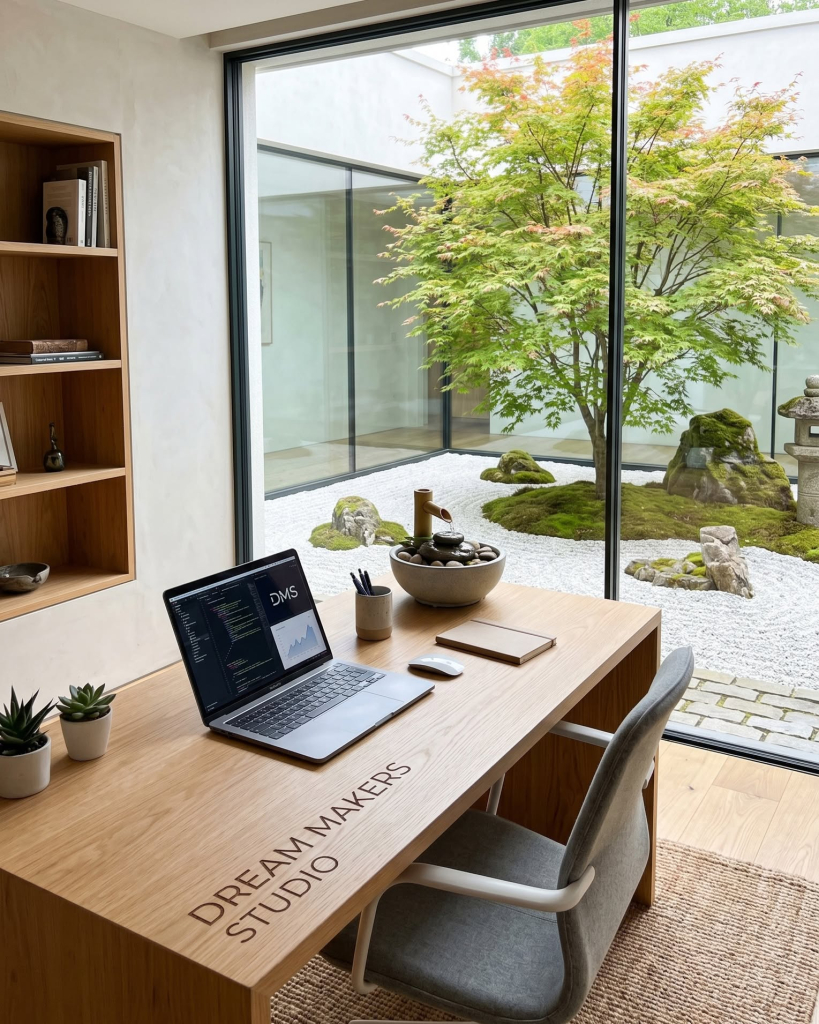
A work area shaped by Japanese garden principles: minimalism, natural materials such as bamboo, stone, and wood, carefully placed plants, and a small water feature whose sound masks background noise. Ideal for: people who work best in a deliberately peaceful atmosphere. Cost: $600–$3,000.
23. Coastal or Beach-Inspired Studio.
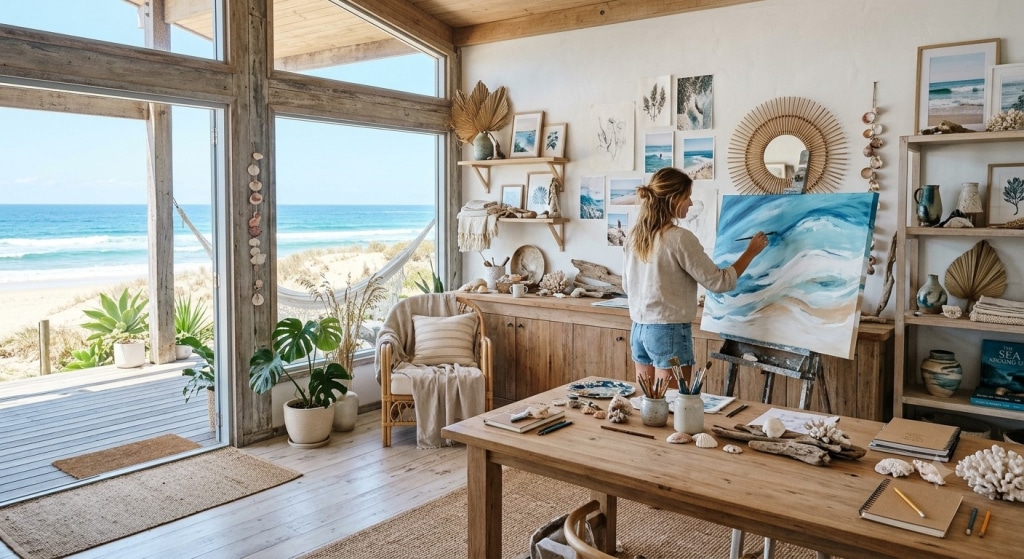
A workspace furnished with sun-bleached wood, navy-and-white fabrics, rope details, and an open view of the sky. A 2019 study in Health and Place linked the look of water-themed surroundings with lower anxiety and better mental restoration (Health and Place, 2019). Cost: $300–$2,000.
24. Woodland or Forest-Edge Cabin Office.
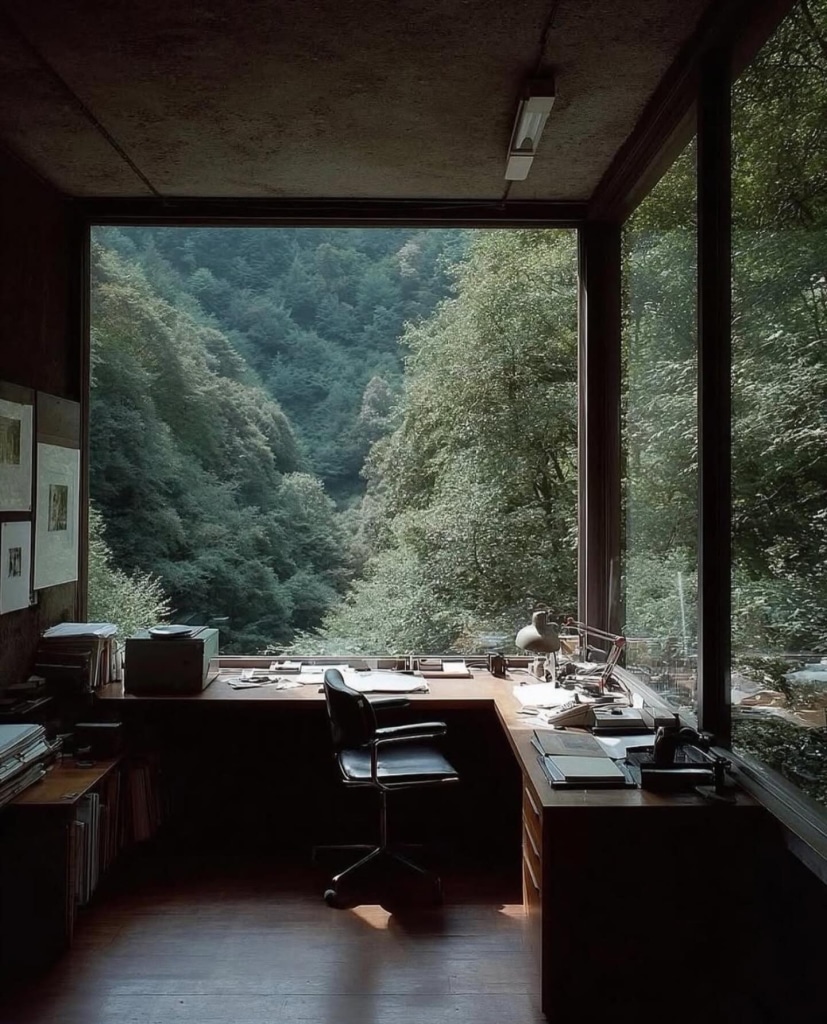
A work area set where a wooded zone begins, or ringed by dense planting, so your day carries some of the feel of shinrin-yoku, the Japanese practice of forest bathing. Ideal for: rural and semi-rural properties that already have tree cover. Cost: $500–$25,000 or more, depending on the structure.
25. The Under-$500 Outdoor Office.
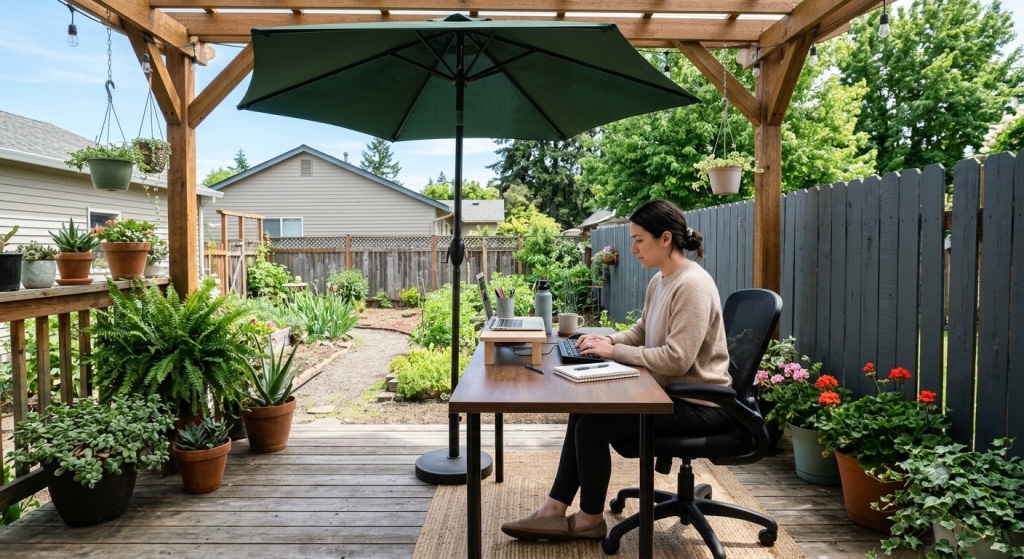
A fully usable daily workspace built in an area that is already roofed, such as a porch, patio, or carport. The shopping list: a weatherproof folding desk ($60–$120), a good outdoor chair ($80–$150), a surge-protected, outdoor-rated extension cord ($30–$50), an anti-glare screen filter for your laptop ($20–$40), and a TP-Link outdoor Wi-Fi extender ($50–$80). The total stays below $500. This option shows that money is rarely the obstacle; planning is. Ideal for: anybody who wants to begin this week.
The Five Practical Problems Every Outdoor Office Must Solve
Whatever structure you pick and however much you spend, five issues need an answer: shelter from sun and rain, glare on the screen, a steady internet connection, a source of power, and furniture and gear that can withstand lasting exposure to the elements.
| Problem | Low-cost fix | Premium fix |
|---|---|---|
| Screen glare | Anti-glare screen filter ($20–$40) | Overhead sail shade plus filter ($200+) |
| Internet signal | TP-Link outdoor extender ($80) | Buried Ethernet cable with an outdoor mesh node ($200+) |
| Power | Outdoor-rated extension cord ($30–$50) | Dedicated outdoor GFCI outlet, professionally installed ($150–$300) |
| Shelter from weather | Sail shade or umbrella ($50–$200) | Pergola with retractable canopy ($1,500+) |
| Furniture durability | Powder-coated aluminum ($150–$400) | Teak or recycled HDPE plastic ($400–$1,200) |
Your Pre-Project Checklist
Lasting outdoor structures, such as prefab garden studios, converted sheds, and custom backyard cabins, usually fall under local zoning laws, HOA covenants, and building-permit requirements in the US. Confirming that you are compliant before you buy or build is an essential first step, both legally and financially.
Work through this list before you spend anything:
- ☐ Watch how sunlight moves across your yard at 8 AM, noon, and 4 PM on a clear day, and note the brightest and shadiest spots.
- ☐ Look up local zoning rules on accessory structures, including setback distances and the size at which a permit is needed.
- ☐ Read your HOA’s rules on visible outdoor structures, colors, and materials.
- ☐ Measure Wi-Fi strength at the planned spot with NetSpot, a free app.
- ☐ Find your existing outdoor outlets and measure how far they are from your workspace.
- ☐ Set a budget and add a 20% cushion, since outdoor projects regularly cost more than first estimated.
- ☐ Decide between doing it yourself and hiring help. Any job involving electrical work or a foundation calls for a licensed contractor.
Final Thoughts: The Upgrade Your Workday Has Been Missing
The best outdoor office is not the priciest one. It is the one that draws you outside, into daylight, and into the frame of mind where your strongest work happens. Each idea here points to the same goal: a place you look forward to sitting down in each morning.
Begin with what you already own. A covered porch and a folding table make a perfectly legitimate outdoor office. Then improve it a step at a time, with better shade, a better chair, or a stronger signal, and let your daily experience steer the next upgrade. The setup you create this month does not have to last forever. It only has to beat the kitchen table.


No Comments