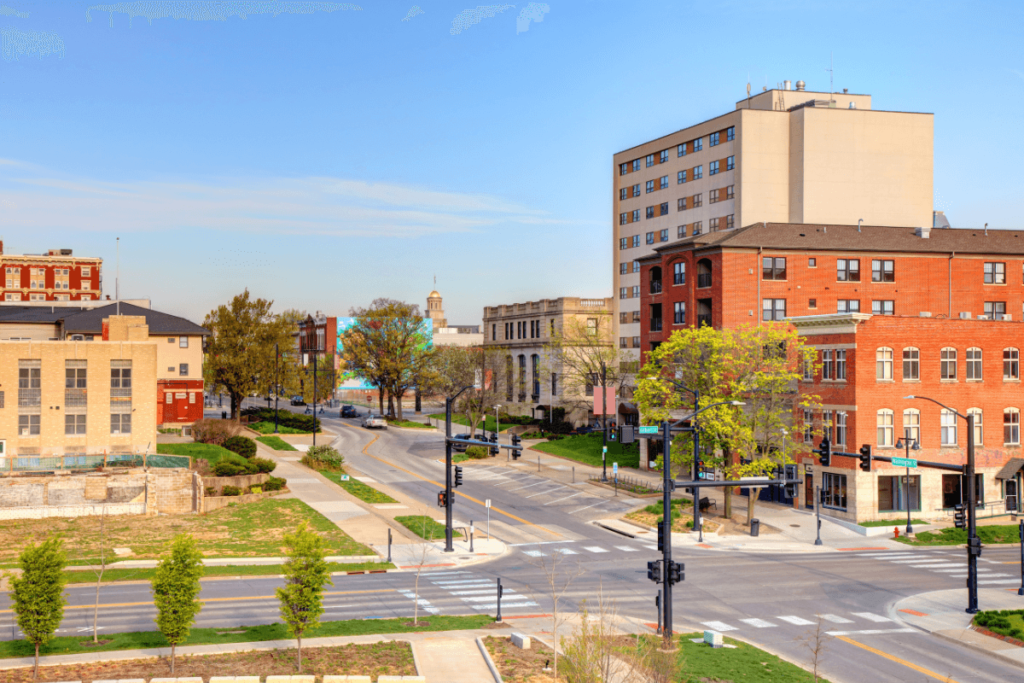
Having battled the L.A. traffic, the outrageous housing prices, and the calendar more packed than a freeway at peak hour, Andy and Doreen Costa were ready to hit the brakes. The husband and wife, 62, lived in Southern California and built up a career and a family there.
But with retirement fast approaching, the mathematics (and the madness) of holding on no longer added up.
They sold the Orange County home and went east, deep east, all the way to Greenville, South Carolina. What they discovered wasn’t just a less expensive mortgage and a less frenetic pace.
It was a completely different tempo of living: mountains in the background, friendly people next door, and, quite possibly, the absolute best part, no traffic.
Even their daughter and son-in-law and two little grandkids joined them beneath the same roof, a multigenerational living arrangement that’s about as warm as the state’s famous Carolina sun. “Terrific,” says Andy. “And there’s no traffic.”
The Costas’ narrative may seem individual, but it represents the wider national pattern.
Increasingly, retirees are uprooting from expensive metros in search of that perfect balance of affordability, security, access to health care, and decent living without sacrificing comfort or civilization.
That’s exactly what Forbes set out and measured in its annual Best Places To Retire in 2025 rankings, comparing more than 950 spots throughout America with everything from the price of housing and healthcare access to taxes, flood and wildfire vulnerability, and air quality.
Let’s examine more closely the standouts like Greenville and 9 other communities redefining the good life after age 60.
The Quest for the Ideal Retirement Haven
Housing prices in the U.S. since 2020 have increased by about 50% according to the National Association of Realtors, which pushed the median single-family price up to $404,000. That’s expensive for retirees who are living off fixed incomes.
That’s why housing costs played a major role in Forbes’ methodology. Of the 25 winning cities, 22 boast median home prices at or below the national median, and four sit comfortably under $300,000, including Iowa City, Lincoln, Pittsburgh, and San Antonio.
But affordability was only one measure. Forbes also considered crime rates, health-care provision, tax regimes, air quality, and climatic vulnerability in eliminating the most at-risk-by-nature cities.
The outcome: a roundup covering 19 states and the four time zones, with a healthy mix of sun-warming getaways and cold but picturesque northern hubs. Let’s begin in the city that’s capturing hearts and headlines, Greenville.
Greenville, South Carolina: The Star of the Show
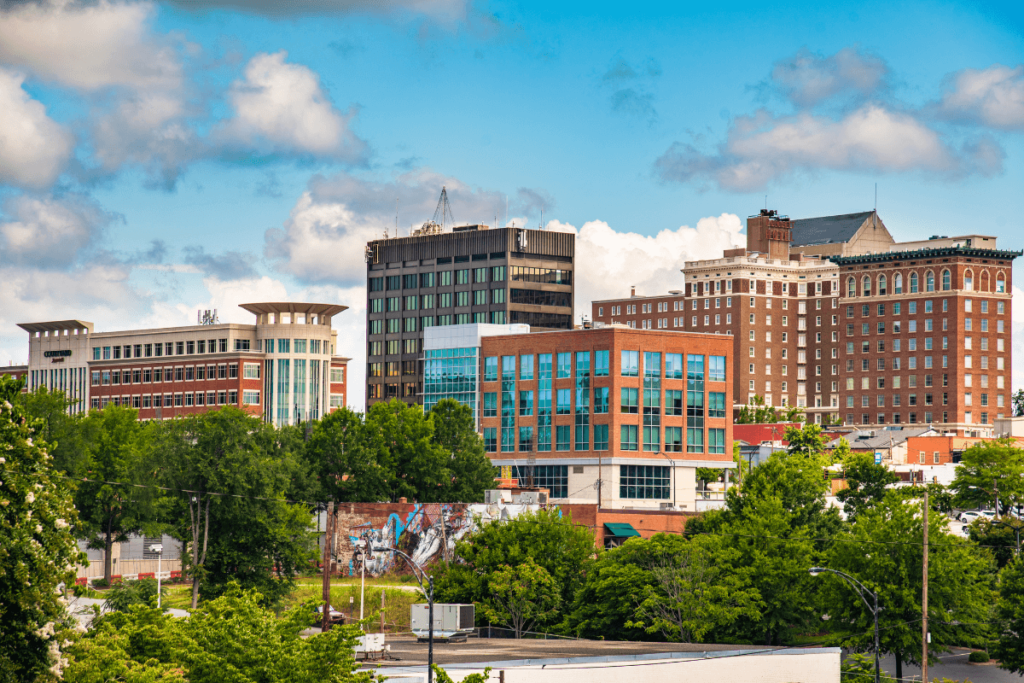
The city’s downtown area sparkles with a 32-acre park overlooking a waterfall at the Reedy River, a picture-perfect scene that seems plucked right from a brochure.
Framed with the Blue Ridge Mountains in the background, this Southern city of 75,000 combines hospitality with chic style.
Houses are $317,000 on average, which works out to roughly 22% less than the nationwide median, and costs of living are likewise 9% below the average. The city has clean air, high rates of doctors per capita, and temperate weather with pedestrian and bike convenience.
Indeed, crime rates stay in the low range above average, and the state income tax in South Carolina still bites at around 6.2% for moderate incomes. But no tax is levied on Social Security income, and no estate and inheritance tax.
For the Costas and an increasing number of transplants, Greenville brings big-city offerings with a small-city soul. And they’re far from alone in discovering that sweet spot.
The Overall Rank: Top 10 Best Retirement Spots in 2025
A closer look at each and every Forbes-credited property, from desert retreats to waterfront retreats.
1. Apache Junction, Arizona
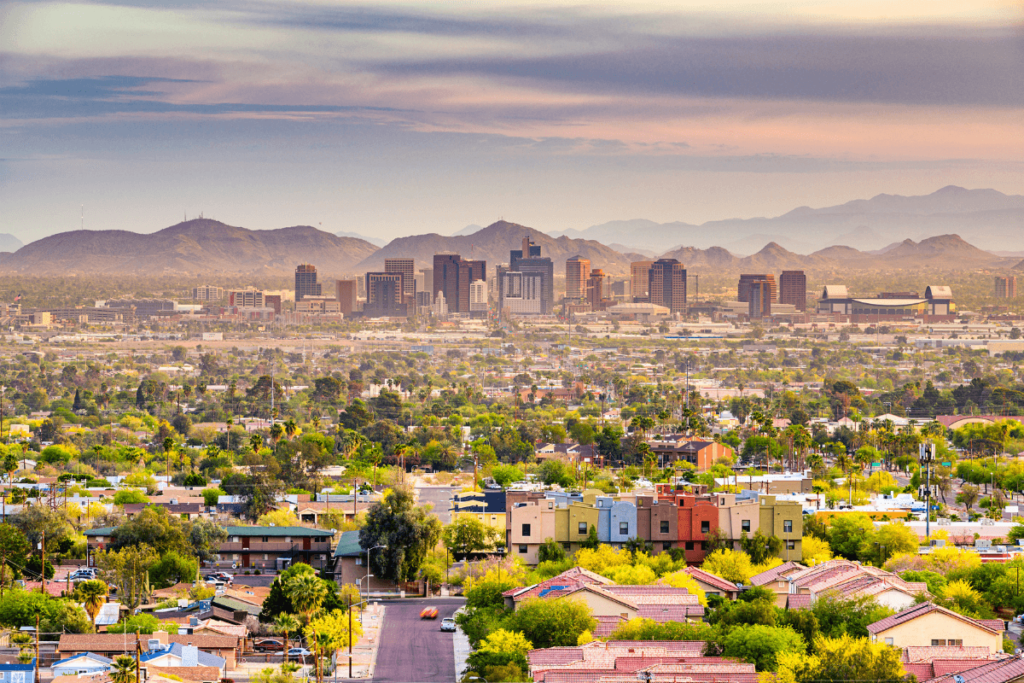
A rapidly growing desert city with 41,000 people, 35 miles from Phoenix, Apache Junction perches at the base of the craggy Superstition Mountains.
The median price for homes stands at $382,000, 5% lower than the U.S. median. It’s perfect for outdoor-loving retirees who adore hiking and hot desert temperatures.
Beyond the stats, mornings are golden over the desert, and afternoons yield pastel sunsets that transform each porch into front-row seats at the theater of nature. Retirees are often at the region’s diners or art fairs, making friends whose camaraderie rivals the state’s warm sunshine.
Pros: Low tax (uniform flat rate 2.5% income tax, Social Security exempt), scenic vistas, and immediate access to doctors.
Cons: Hot summer, high crime, and air-quality issues.
2. Athens, Georgia
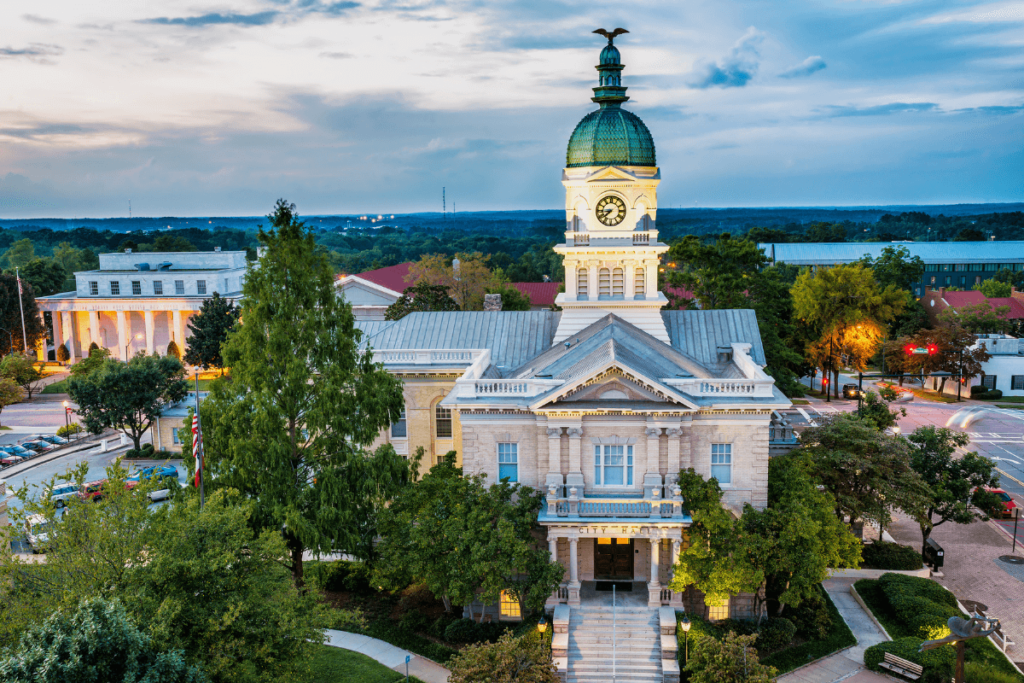
A lively college town of 130,000 (home to the University of Georgia) located 70 miles from Atlanta. Homes run $333,000, 18% below the national median.
Athens flourishes with creativity; its music scene spawned legends such as R.E.M. and the B-52s, and its retirees now savor its art museums, intimate cafes, and streets lined with trees. It’s the type where history, music, and Southern cuisine intersect in perfect harmony.
Pros: Superior health care access, desirable climate, and generous retiree tax breaks. Georgia does not tax Social Security and up to $65,000 of other retirement income.
Cons: Crime rates are slightly higher than average, and the economy is weak.
3. Bethlehem, Pennsylvania

This reborn steel city of 80,000 in the Lehigh Valley has emerged as a scenic, arts-centered community.
Strolling through Bethlehem feels like walking into a postcard, with brick streets, older-world architecture, and festive winter holiday markets drawing visitors from all parts of the state. It’s tiny enough to stay neighborly but large enough and busy enough so that things stay interesting.
Pros: Median $334,000, better healthcare access, good air, and extremely low crime. Pennsylvania’s flat-rate 3.07% income tax does not tax Social Security and generally most retirement income.
Cons: There’s an inheritance tax that covers almost all the heirs, and the winters are cold.
4. College Station, Texas
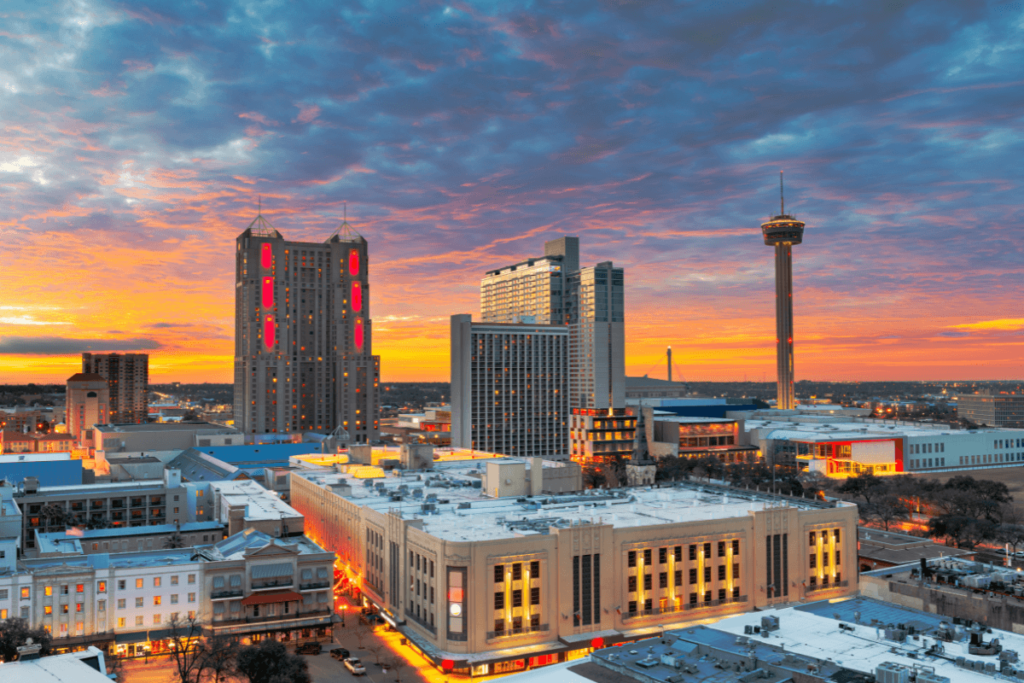
The city seat of Texas A&M University, College Station (pop. 128,000), lies 85 miles northwest of Houston.
Pros: Affordable homes at $347,000, no state income or estate tax, and a strong local economy. The air is clean, and serious crime is low.
Cons: Humid and not very walkable, so load up the car and the air conditioning.
5. Columbia, Missouri
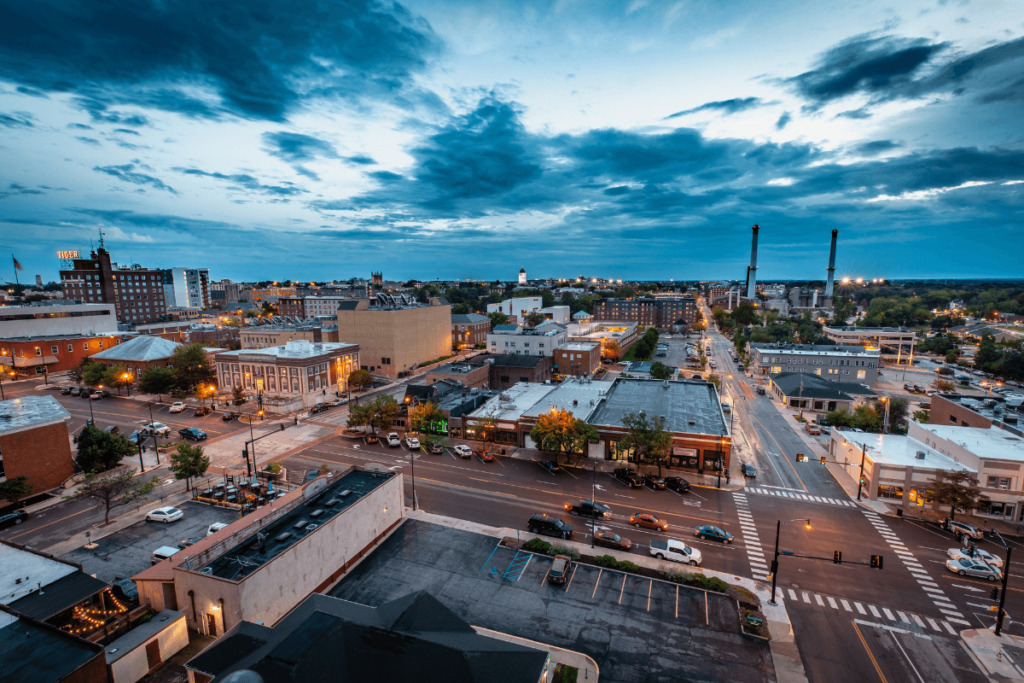
Nestled between St. Louis and Kansas City, this college cluster (University of Missouri, Stephens, and Columbia College) boasts affordable living and strong medical care.
Columbia’s spirit comes alive most in the city center, where independent bookshops and coffee houses are abuzz with talk. Seniors adore its weekend farmers market and verdant paths looping through forested parks, a reminder that the good life needn’t come with urban hubbub.
Pros: Average sale price $306,000, low levies (4.7% top state rate, no Social Security tax), and superior air quality.
Cons: Crime and walkability are slightly above average.
6. Fargo, North Dakota
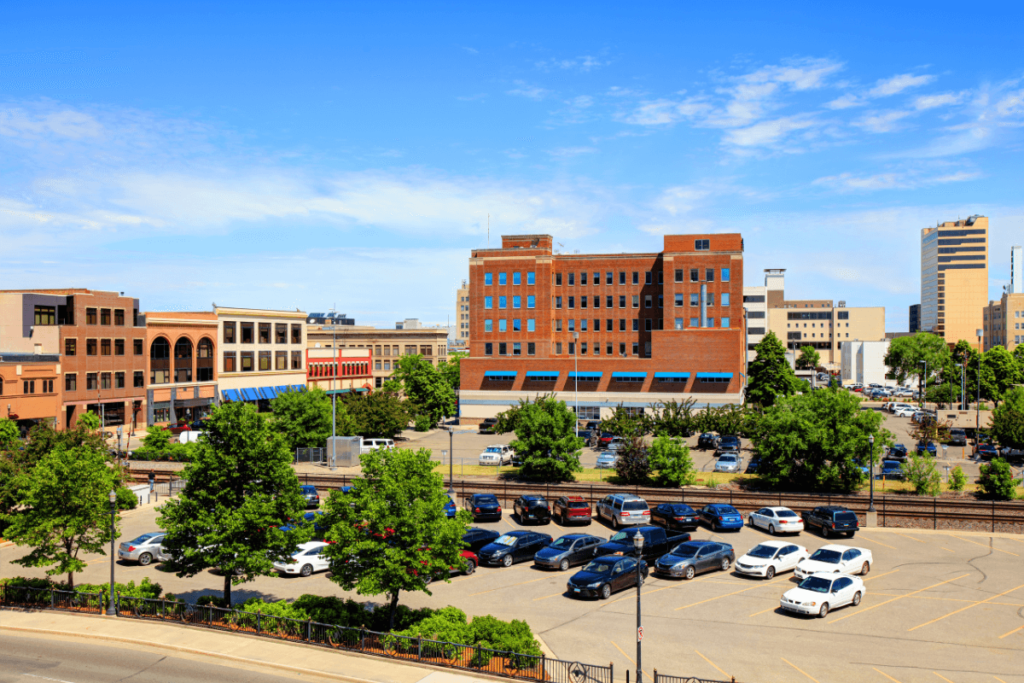
Despite its cold winters, Fargo’s community warmth is undeniable. The median home price is $305,000, 25% below the national mark.
Pros: Excellent healthcare ratio, good air, and a low state income tax, topping at just 2.3%. No estate or Social Security tax.
Cons: Cold winters that push even the toughest Midwesterners, and a tad more crime than usual.
7. Greenville, South Carolina

Repeatedly mentioned previously above, but still worth repeating: affordable housing, temperate weather, and vibrant downtown. It’s the very definition of small-city growth, the correct way.
Pros: Median $317,000, which is 22% lower than the nationwide median. Superior physicians per-capita ratio, comfortable climate, very bikeable, and moderately walkable. Good air quality. No inheritance/state estate tax.
Cons: Above-national-average serious crime rate. Despite decreasing, state income tax remains a pretty high 6.2% for couples with about $17,830 in taxable income after federal deduction (but no tax on Social Security and $10,000 per person of other retirement income).
8. Iowa City, Iowa